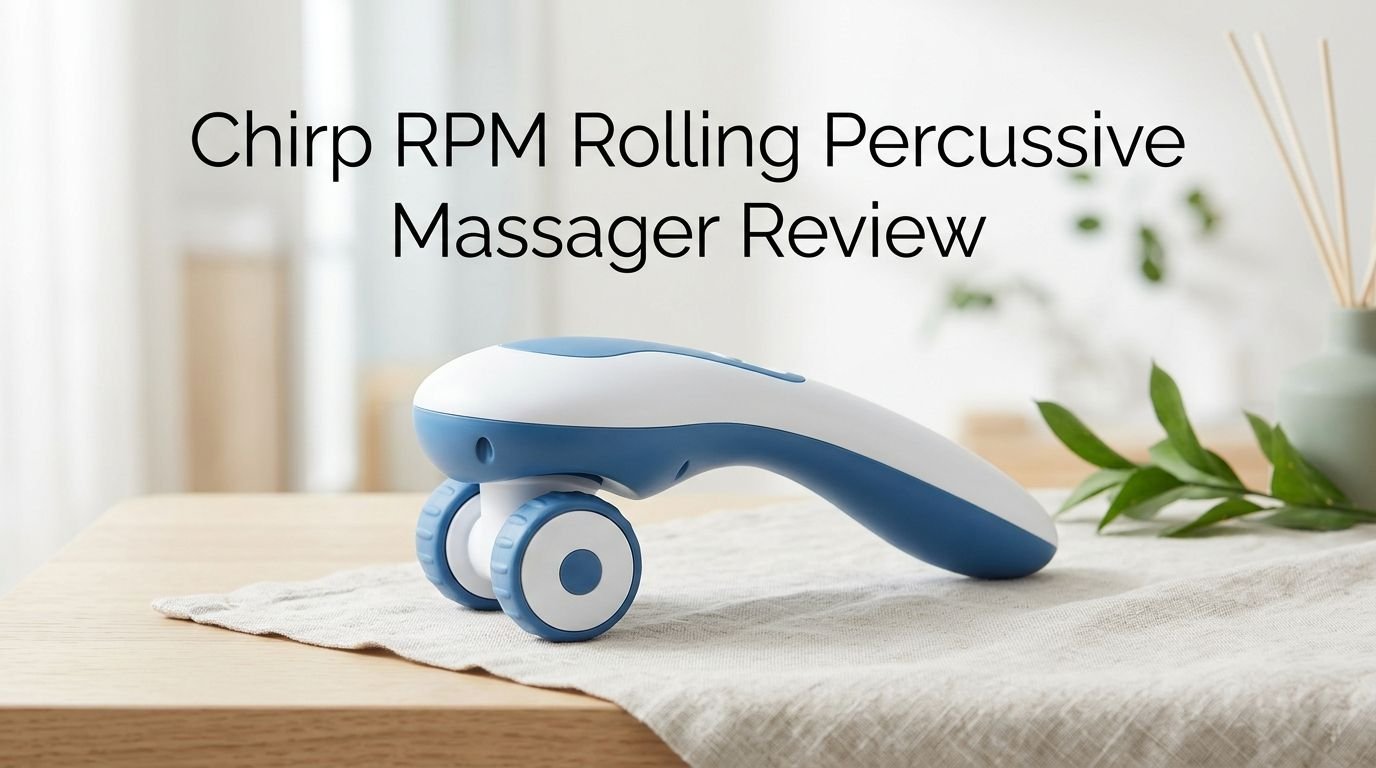
Chirp RPM Rolling Percussive Massager Review 2026
Your muscles are tired. Your foam roller sits in the corner collecting dust. Your massage gun only hits one small spot at a time. You want something that does both jobs well.
The Chirp RPM Rolling Percussive Massager promises exactly that. It combines a foam roller and a percussion massager into one single device.
I spent weeks testing the Chirp RPM on sore quads, tight calves, aching feet, and a stiff back. This review covers every detail you need to know before spending your money. You will learn how it works, what it feels like, where it excels, and where it falls short.
Key Takeaways:
- The Chirp RPM is a hybrid device that merges a percussive massage gun with a foam roller. It covers 400% more surface area than a standard massage gun head, which makes it great for large muscle groups like quads, hamstrings, and back muscles.
- Five speed settings with reversible spin give you full control over intensity. Speed 1 is gentle enough for sensitive areas. Speed 5 delivers deep, powerful percussion that can break through the tightest knots.
- The hands-free base is a standout feature. Place the RPM on its stand, and it becomes a powered foot roller. This is exceptional for plantar fasciitis relief and general foot recovery after long days on your feet.
- Battery life is solid. Regular use gives you about 2 hours per charge. Light use stretches that to around 8 hours. The device charges through a USB-C PD cable or a 2.5mm barrel connector.
- At $249.99, the Chirp RPM sits below premium massage guns like the Theragun Pro ($399+) while offering a unique rolling feature that no traditional massage gun can match.
- The device weighs 3.7 pounds without the stand and about 5 pounds with the stand. It is not a travel-friendly option. Consider the Chirp RPM Mini if you need portability.

What Is the Chirp RPM Rolling Percussive Massager?
The Chirp RPM is a powered rolling percussive massager built by Chirp, a company that first gained fame on Shark Tank with their popular back wheel. RPM stands for Rolling Percussive Massager, not “revolutions per minute” as many people assume.
The device looks like an oversized kitchen rolling pin. It has handles on both sides and a rotating cylinder in the center. Inside that cylinder sit eight independently spinning beaded roller bars. These bars rotate freely while the main cylinder also spins on a motorized axis.
This dual action creates a unique sensation. You get the broad, sweeping pressure of a foam roller combined with the deep, targeted percussion of a massage gun. The result is a tool that works across large muscle groups with impressive efficiency.
The Chirp RPM measures about 20 inches long, 5 inches wide, and 7 inches tall on its stand. The massaging surface itself is roughly 4 by 7 inches. That is significantly larger than any single massage gun attachment head on the market today.
How Does the Chirp RPM Work?
Using the Chirp RPM is straightforward. You press the power button to turn it on. Then you press and hold the start trigger to activate the rollers. From there, you select your preferred speed from the five available options.
A switch on the handle lets you reverse the spin direction. This is useful because different muscle groups respond better to different rolling directions. Forward spin pushes tissue away from you. Reverse spin pulls it toward you.
You can use the device in two main ways. The first is handheld mode. You grip both handles and roll it across your body like a rolling pin. You control the pressure by adjusting how hard you press down.
The second is hands-free mode. You place the RPM on its included stand with the start trigger facing down. The stand compresses the trigger automatically. Then you simply hit the power button, and the rollers start spinning. You place your feet, calves, or forearms on top and let the device do all the work.
This hands-free function is what truly sets the Chirp RPM apart from every other percussive device on the market. No other tool offers this type of passive, powered rolling massage experience.
Build Quality and Design
The Chirp RPM feels premium in your hands. The handles are solid and comfortable to grip. The buttons are responsive and easy to reach during use. The outer casing has a modern matte black finish that resists fingerprints and scuffs.
The beaded rollers in the center are made from hard plastic. Some users wish these were softer, perhaps made from firm rubber like standard massage gun heads. However, the hard plastic is durable and effective at digging into deep tissue.
The included hands-free base is sturdy and holds the device securely. It does not wobble or slide during use, even at the highest speed setting. The base adds about 1.3 pounds to the total weight, bringing the combined weight to approximately 5 pounds.
The overall construction feels like it can handle regular daily use without breaking down. The motor sounds strong and consistent across all five speeds. There are no rattles, loose parts, or cheap-feeling components anywhere on the device.
Top 3 Alternatives for Chirp RPM Rolling Percussive Massager
1. Robufit Electric Rolling Percussive Massager

2. Therabody Theragun Prime (5th Generation)

3. Hyperice Hypervolt 2 Pro

Battery Life and Charging
The Chirp RPM uses a rechargeable lithium battery that performs well for home use. Under regular, consistent use, you can expect about 2 hours of runtime. If you use it lightly or only a few minutes at a time, it can last up to 8 hours between charges.
The device charges via a 2.5mm barrel connector or a USB-C PD cable. Both cables come included in the box. Charging time is reasonable. Most users report a full charge in about 2 to 3 hours.
A small LED indicator on the handle shows the current battery level. This helps you avoid unexpected shutdowns during a recovery session. The light flashes when the battery is low, giving you enough warning to plug it in.
For daily users, charging overnight every two to three days should be more than enough. Weekend warriors who use it only after workouts will find the battery lasts well over a week between charges. The battery performance is solid and compares favorably to other premium massagers in this price range.
Performance on Different Body Parts
The Chirp RPM shines on large muscle groups. It is exceptional on quads, hamstrings, calves, and the lower back. The wide rolling surface covers more area per pass than any traditional massage gun.
Quads and hamstrings respond beautifully to this device. The rolling action combined with percussion creates a deep kneading sensation. Speed 2 or 3 is ideal for most people on these large muscles. Speed 4 and 5 are best reserved for athletes with very tight tissue.
Calves get incredible relief from both handheld and hands-free modes. In hands-free mode, you sit on a chair and rest your calves on the spinning rollers. The device does all the work while you relax.
Feet are where the Chirp RPM truly excels. Place it on the stand, power it on, and rest your bare feet on the rollers. The sensation is a mix between a professional foot massage and a targeted percussion treatment. People with plantar fasciitis or high arches will find this feature particularly valuable.
Upper body use is more limited. The device’s size and shape make it awkward to use on shoulders, the upper back, and neck without a partner’s help. These areas are better served by a traditional massage gun.
The Hands-Free Base Experience
The hands-free base is the single best feature of the Chirp RPM. It transforms this handheld device into a passive recovery station that works while you watch TV, read a book, or sit at your desk.
Setting it up takes about five seconds. Place the RPM onto the base with the start trigger facing down. The base presses the trigger for you. Hit the power button, select your speed, and you are ready to go. No holding, no gripping, no effort.
For foot recovery, this feature is almost worth the entire purchase price on its own. You control the pressure simply by adjusting how much weight you place on the device. Light pressure gives a gentle, relaxing massage. Pressing down harder delivers deep, powerful percussion.
The base also works well for calves and forearms. You drape the target area over the spinning rollers and let gravity do the rest. The experience is relaxing and effective at the same time.
One word of caution: start slow with the hands-free mode on your feet. The percussion can make your feet sore if you overdo it during the first few sessions. Limit your first sessions to 3 to 5 minutes and build up from there.
Chirp RPM vs. Traditional Massage Guns
Traditional massage guns like the Theragun Prime or Hypervolt 2 Pro are excellent tools. They deliver focused, deep percussion to specific trigger points. But they have a clear limitation: surface area.
A typical massage gun head covers about 1 to 2 square inches. The Chirp RPM covers roughly 28 square inches of massaging surface. That is a massive difference for anyone who wants broad muscle relief.
Traditional massage guns excel at pinpoint targeting. If you have one specific knot in your shoulder, a Theragun will address it faster and more precisely. The Chirp RPM is better for sweeping across large areas and treating an entire muscle group in less time.
Noise is another factor. Most modern massage guns are quieter than the Chirp RPM. The RPM produces a noticeable hum, especially at higher speeds. It is not disruptive, but you would not want to use it during a quiet meeting.
Portability clearly favors massage guns. A Theragun Mini fits in a backpack. The Chirp RPM weighs 5 pounds with its stand and measures 20 inches long. It is a home recovery tool, not a travel companion.
The best approach for serious athletes is to own both types. Use the Chirp RPM at home for broad, full-body recovery. Carry a compact massage gun for travel and targeted work.
Who Should Buy the Chirp RPM?
The Chirp RPM is ideal for runners, cyclists, weightlifters, and team sport athletes who accumulate significant muscle fatigue across large muscle groups. The rolling action covers more area faster than any single massage gun can.
People with plantar fasciitis or chronic foot pain should seriously consider this device. The hands-free foot massage capability alone justifies the price for many users. It delivers the kind of deep foot relief that typically requires a professional appointment.
Office workers who sit for long hours will benefit from the hands-free calf and foot modes. Place the RPM under your desk, and you have an instant recovery station during your workday.
Anyone who finds foam rolling tedious will appreciate the Chirp RPM. It does the rolling for you. No more awkwardly balancing on a foam roller on the floor. No more straining your arms to apply pressure. The motor handles everything.
This device is not ideal for people who need precise trigger point work on small muscles. It is also not a good fit for frequent travelers who need something portable. If those are your primary needs, stick with a traditional compact massage gun.
Chirp RPM vs. Chirp RPM Mini

Chirp offers two versions of the RPM. The full-sized RPM at $249.99 and the RPM Mini at $149.99. The Mini is a compact version built for portability.
The RPM Mini is lighter, smaller, and easier to pack in a bag. It delivers similar percussive rolling therapy but with a smaller surface area. The motor is slightly less powerful, but still effective for most recovery needs.
If you only have room for one device, the full-sized RPM is the better value. Its larger surface area and stronger motor deliver a more thorough massage experience. The hands-free base also fits the full-sized RPM better.
If you travel often, the RPM Mini is the smarter choice. It gives you the rolling percussive experience in a package that fits in a carry-on bag. Some retailers have offered bundle deals where you get the Mini free with a larger Chirp purchase.
For the best of both worlds, some users buy the full-sized RPM for home use and the Mini for travel. This combination covers every recovery scenario you might encounter.
Noise Level and Comfort
The Chirp RPM is louder than most modern massage guns. At speed 1 and 2, the noise is a gentle hum. At speed 4 and 5, the noise becomes more noticeable. You will probably want to turn up your TV volume a notch if using it in the living room.
The noise is not unbearable or disruptive. It is comparable to a loud electric shaver or a small kitchen appliance. You can still hold a conversation while using it. But it is not a silent device, and that is worth knowing before you buy.
Comfort depends on your pain tolerance and the body part you are treating. The hard plastic beaded rollers dig into tissue aggressively, especially at higher speeds. New users should start at speed 1 or 2 and work up gradually over several sessions.
The handles are comfortable to grip for extended periods. They do not cause hand fatigue during typical 10 to 15 minute sessions. The weight of the device (3.7 pounds) helps apply natural pressure without you needing to push hard.
Pricing and Value
At $249.99, the Chirp RPM sits in a competitive price range. The Theragun Prime costs around $299. The Hypervolt 2 Pro runs about $329. Both of those are traditional massage guns with smaller treatment areas.
The Chirp RPM offers unique value because no other device at this price combines rolling and percussive therapy. You would need to buy a separate foam roller and a separate massage gun to get similar results. That could easily cost $300 to $400 combined.
The device is FSA eligible, which means you may be able to use your Flexible Spending Account dollars to purchase it. This effectively reduces the out-of-pocket cost for many buyers.
Chirp also sells through Amazon, Best Buy, Walmart, and their own website. Prices stay consistent across retailers, but Amazon occasionally offers small discounts during Prime Day and holiday sales. The manufacturer backs the product with a warranty and responsive customer support.
For the combination of features, build quality, and versatility, the Chirp RPM delivers strong value at its price point. It is one of the few recovery tools that truly offers something different from everything else on the market.
Pros and Cons of the Chirp RPM
The Chirp RPM gets many things right. The rolling percussive therapy concept works well. The hands-free base is a game changer for foot and calf recovery. Five speed settings give you enough range for gentle or aggressive sessions. The build quality feels worthy of the $249 price tag.
The broad surface coverage saves time during recovery sessions. Instead of spending 20 minutes targeting individual spots with a massage gun, you can treat an entire muscle group in 5 to 10 minutes with the RPM.
However, the device has clear weaknesses. Its size and weight limit it to home use. The hard plastic rollers can feel aggressive on bony areas. Upper body access is limited without a partner. The noise level is higher than competing massage guns.
Some users may also miss the pinpoint precision of a traditional massage gun. The RPM treats areas broadly, not specifically. If you have a deep knot in one exact spot, a focused massage gun head will address it more effectively.
Overall, the positives outweigh the negatives for most users. The Chirp RPM fills a gap in the market that no other single device addresses.
Final Verdict: Is the Chirp RPM Worth Buying in 2026?
Yes, the Chirp RPM Rolling Percussive Massager is worth buying in 2026. It solves a real problem. Traditional massage guns cover too little area. Foam rollers require too much effort. The Chirp RPM bridges that gap with a clever, well-built hybrid design.
The hands-free foot massage feature alone makes this device valuable for anyone with chronic foot pain. Add in the broad muscle coverage and solid battery life, and you have a recovery tool that earns its place in your home gym.
The best candidate for this product is someone who wants efficient, full-body recovery without the hassle of multiple devices. Athletes, fitness enthusiasts, and desk workers will all find genuine benefit from the Chirp RPM.
At $249.99, the price is fair and competitive. You are getting a unique device that does something no traditional massage gun can do. If broad rolling percussion therapy sounds like what your muscles need, the Chirp RPM delivers on its promise.
Frequently Asked Questions
Is the Chirp RPM good for plantar fasciitis?
Yes, the Chirp RPM is excellent for plantar fasciitis. The hands-free base lets you place the device on the floor and rest your feet on the spinning rollers. The percussive rolling action targets the plantar fascia directly. Many users report significant relief after just a few sessions. Start with low speed and short sessions to avoid soreness.
How long does the Chirp RPM battery last?
The Chirp RPM battery lasts about 2 hours under regular use. With lighter, intermittent use, the battery can stretch to approximately 8 hours between charges. A full recharge takes about 2 to 3 hours using the included USB-C PD cable or barrel connector.
Can you travel with the Chirp RPM?
The full-sized Chirp RPM is not ideal for travel. It weighs 3.7 pounds without the stand, measures 20 inches long, and does not fit easily in luggage. If you need a portable option, the Chirp RPM Mini is a better choice for travel. It offers similar rolling percussive therapy in a smaller, lighter package.
Is the Chirp RPM loud?
The Chirp RPM is louder than most modern massage guns. At lower speeds, the noise is a soft hum. At higher speeds, it becomes more noticeable. It is not disruptive enough to bother others in the same room, but you may want to increase your TV volume slightly while using it.
How does the Chirp RPM compare to a Theragun?
The Chirp RPM and Theragun serve different purposes. The Theragun excels at targeted, pinpoint percussion on specific trigger points. The Chirp RPM covers a much larger surface area and combines rolling with percussion. The RPM is better for broad muscle recovery. The Theragun is better for focused, deep knot work. Many athletes use both for a complete recovery routine.
Is the Chirp RPM FSA eligible?
Yes, the Chirp RPM is FSA eligible. You can use your Flexible Spending Account funds to purchase it through authorized retailers. Check with your FSA provider for specific purchase requirements and documentation.