Manduka PROlite Yoga Mat Review: Is It Worth Buying?
You know that feeling when you slip during downward dog and almost face-plant into your mat? Yeah, not fun. Your yoga mat can make or break your practice, and I’ve been testing the Manduka PROlite for the past three months to see if it lives up to the hype.
This isn’t just another yoga mat review filled with fancy marketing words. I’m going to tell you exactly what works, what doesn’t, and whether you should spend your hard-earned cash on this premium mat. Spoiler alert: it surprised me in ways I didn’t expect.
Key Takeaways:
- Superior grip that gets better with time – The closed-cell surface actually improves after a few weeks of use, giving you rock-solid stability during intense flows and hot yoga sessions.
- Lifetime guarantee means you buy it once – Manduka stands behind this mat with a lifetime warranty, which basically means this could be the last yoga mat you ever buy if you take care of it properly.
- Eco-friendly construction without toxic chemicals – Made from non-Amazon rubber and completely free from PVC, this mat won’t off-gas weird smells in your living room or poison the planet.
- Weighs less than standard mats but still cushions joints – At just 4 pounds, it’s portable enough for studio classes while providing 5mm of cushioning that protects your knees and elbows during floor work.
- Premium price tag requires commitment – This mat costs more than budget options, but the durability and performance justify the investment if you practice regularly (think 3+ times per week).
- Break-in period requires patience – The first few practices feel slippery, which freaks out new users, but this completely changes after proper breaking in.

Why the Manduka PROlite Stands Out in 2026
The yoga mat market exploded over the past few years. You can buy mats for $15 at discount stores or drop $200 on luxury options. The Manduka PROlite sits in that premium middle ground where quality meets reasonable pricing.
What makes this mat different? The construction quality blows away cheaper alternatives. Manduka uses a proprietary closed-cell surface that prevents sweat and bacteria from seeping inside the mat. This means your mat stays cleaner and lasts longer than open-cell foam mats that turn into bacterial playgrounds.
The density surprises most people. This mat feels solid under your hands and feet. You’re not sinking into mushy foam that bottoms out after six months. The high-density cushioning supports your joints without making balance poses feel like standing on a waterbed.
Unboxing and First Impressions
My Manduka PROlite arrived rolled up in minimal packaging. No plastic waste, no excessive boxes. Just the mat secured with a paper band. I appreciated this eco-conscious approach immediately.
The mat felt heavier than I expected for something marketed as a “lite” option. At 4 pounds, it has substance. This weight tells you the materials are dense and durable. Cheap mats feel light because they use thin, inferior materials that wear out quickly.
The texture caught me off guard. The surface felt almost slippery at first touch. This worried me initially. How could a slippery mat provide good grip? I learned this smoothness is intentional and changes dramatically with use.
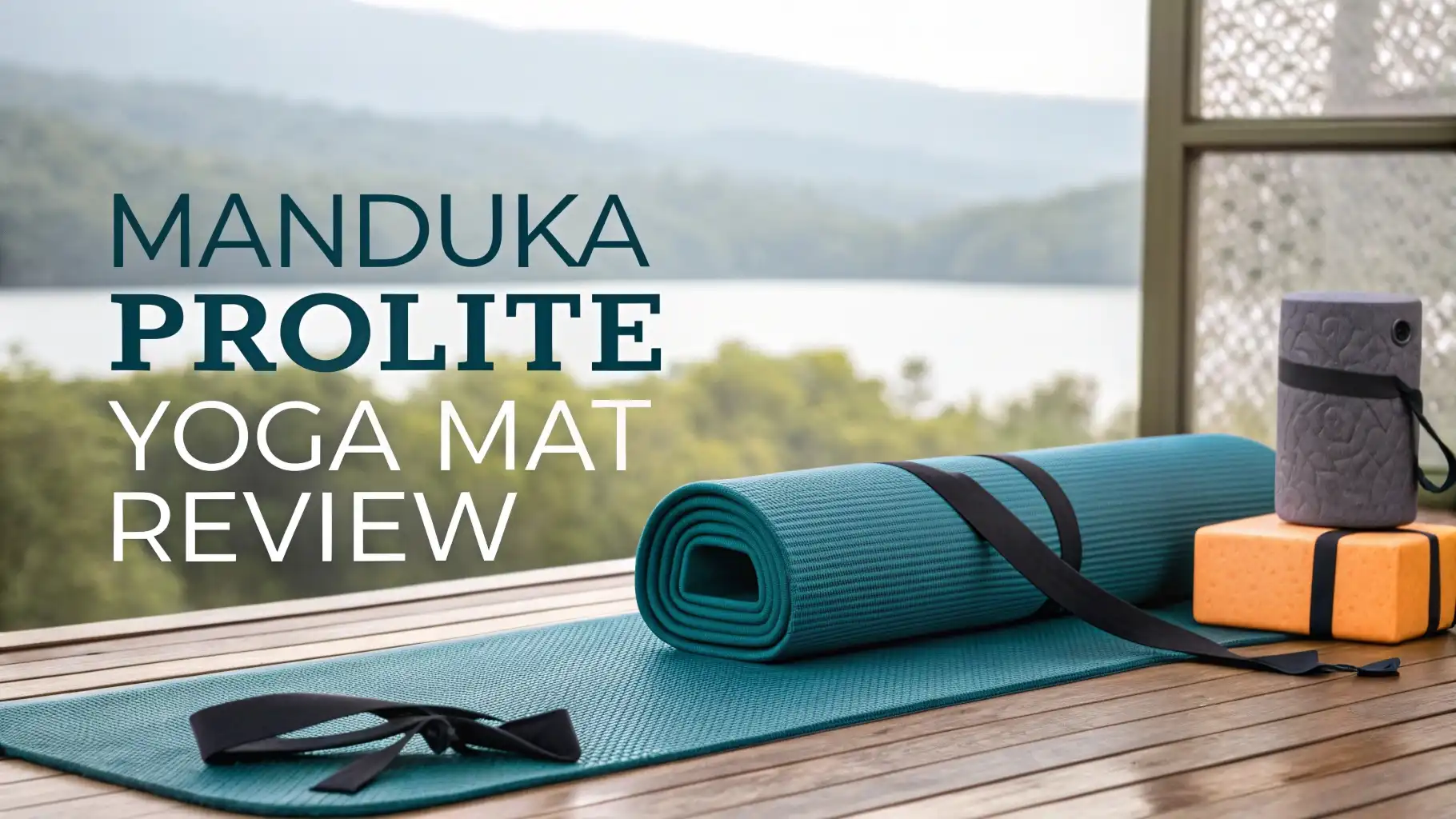
The color options impressed me. Manduka offers the PROlite in multiple beautiful shades. I chose a deep purple that looks gorgeous in my home studio. The color goes all the way through the mat, so it won’t wear off or fade over time.
One thing I noticed immediately: no chemical smell. Budget mats often reek of toxic off-gassing when you first unroll them. The PROlite smelled neutral. This matters if you’re doing breathing exercises with your face inches from the mat.
Performance During Different Yoga Styles
I tested this mat across multiple yoga disciplines to see how it performs in real conditions.
Vinyasa and Power Yoga: The PROlite shines during flowing sequences. Once broken in, my hands and feet stayed planted during transitions between poses. The grip held strong even when I worked up a serious sweat. The 5mm thickness cushioned my knees during low lunges without making me feel disconnected from the ground.
Hot Yoga and Bikram: This is where things got interesting. In 105-degree heat with high humidity, the closed-cell surface prevented sweat from soaking into the mat. I could wipe the surface clean between poses. However, I did need to use a yoga towel during particularly sweaty sessions for optimal grip.
Yin and Restorative Yoga: The cushioning supported my body during long holds. My knees felt comfortable during extended pigeon poses. My elbows didn’t ache during supported child’s pose. The mat provided enough padding without being too soft.
Top 3 Alternatives for Manduka PROlite Yoga Mat


The Break-In Period: What Nobody Tells You
Here’s the truth that surprises most PROlite buyers: this mat needs breaking in. You can’t use it straight out of the box and expect perfect grip.
During my first three practices, my hands slipped during downward dog. I questioned my purchase. Had I wasted money on an overhyped mat? I almost gave up and went back to my old mat.
Then I did what Manduka recommends: I scrubbed the mat with a salt water solution. I mixed sea salt with warm water and used a soft cloth to rub down the entire surface. This process removes the film from manufacturing and opens up the texture.
The difference after one salt scrub was noticeable. After three regular practices post-scrub, the mat transformed. The grip kicked in. My hands and feet stayed put. The “slippery” surface became tacky and secure.
Durability and Longevity After Three Months
Three months into ownership, my PROlite shows zero signs of wear. The surface looks identical to day one. No peeling, no thinning, no breakdown of materials.
I practice five to six times per week. My mat has seen sweaty power yoga, gentle yin sessions, and everything in between. It’s been rolled and unrolled countless times. It’s been cleaned repeatedly. It still looks and performs like new.
The lifetime guarantee isn’t just marketing talk. Manduka genuinely builds these mats to last for years, potentially decades. The closed-cell construction prevents the internal breakdown that kills cheaper mats.
Compare this to budget mats I’ve owned. Those typically start showing wear within three to six months. The surfaces peel. The cushioning compresses and loses bounce. The grip diminishes. You end up buying replacement mats every year, which costs more in the long run.
Grip and Traction: The Make-or-Break Factor
Grip is everything in a yoga mat. You can forgive other flaws, but if you’re sliding around, the mat fails its basic purpose.
The PROlite’s grip system works differently than most mats. Instead of a sticky surface that grabs your skin, it uses a textured, closed-cell pattern that creates friction. This means the grip doesn’t rely on tackiness that wears off over time.
Dry hands and feet stick beautifully to this mat. During regular temperature practices, I never worry about slipping. Transitions feel secure. Balance poses feel stable. My foundation stays solid.
Sweaty conditions require a different approach. When my hands get really wet, I notice some slip. This isn’t unique to the PROlite. Most mats struggle with excessive moisture. The solution is simple: use a yoga towel during hot classes or wipe your hands periodically.
Cushioning and Joint Support
At 5mm thick, the PROlite sits in the middle of the thickness spectrum. It’s not an ultra-thin travel mat, but it’s not a thick, cushy mat either. This thickness hits a sweet spot for most practitioners.
My knees feel supported during kneeling poses. Low lunges don’t hurt. Tabletop position feels comfortable. The mat provides enough padding to protect pressure points without being excessive.
The density matters more than thickness. The PROlite uses high-density cushioning that doesn’t compress or bottom out. When I put weight on my knees, I feel the support. The mat doesn’t squish down to the floor.
Compare this to thick but low-density mats. Those might measure 6mm or 8mm, but they compress so much under weight that you end up feeling the hard floor anyway. The PROlite’s 5mm of dense material outperforms thicker but mushier alternatives.
Cleaning and Maintenance Made Simple
Yoga mats get gross. They collect sweat, dead skin cells, and whatever dust and dirt exists in your practice space. Keeping them clean matters for hygiene and longevity.
The closed-cell surface makes cleaning incredibly easy. Sweat and bacteria can’t penetrate into the mat. Everything stays on the surface where you can wipe it away.
My cleaning routine is simple. After sweaty practices, I spray the mat with a mixture of water and a few drops of tea tree oil. I wipe it down with a clean cloth. The mat dries quickly because moisture doesn’t soak in.
For deeper cleaning, I do a monthly wash. I fill my bathtub with cool water and a tiny amount of gentle soap. I submerge the mat, gently scrub both sides with a soft cloth, rinse thoroughly, and hang it to dry. It’s dry and ready to use within a few hours.
I never throw this mat in the washing machine. The agitation and heat could damage the materials. Hand washing takes ten minutes and keeps the mat in perfect condition.
Portability and Travel Considerations
At 4 pounds and 71 inches long, the PROlite balances portability with full-size functionality. It’s light enough to carry to yoga studios but substantial enough to feel premium.
I can sling this mat over my shoulder and walk to my local studio without strain. It fits in standard yoga mat bags. The weight doesn’t bother me during short commutes.
For longer travel, I might choose a lighter option. If I’m flying across the country or backpacking through Southeast Asia, I’d probably opt for Manduka’s thinner travel mat instead. But for local studio visits and car travel, the PROlite works perfectly.
The mat rolls up easily and stays rolled. Some mats fight you when you try to roll them. Others pop open the moment you release them. The PROlite has enough structure to stay put once rolled, but it’s not stiff or difficult to manipulate.
Price Point: Is the Investment Worth It?
Let’s talk money. The Manduka PROlite costs significantly more than budget yoga mats. You can buy three or four cheap mats for the price of one PROlite.
But here’s the calculation that matters: cost per use over time. A cheap mat might last six months to a year with regular practice. You’ll buy multiple replacement mats over several years. Each replacement costs money and creates waste.
The PROlite, with its lifetime guarantee and durable construction, could last a decade or longer. If you practice regularly, you might use this mat 500 to 1000 times or more. The per-use cost becomes incredibly low.
I’ve owned cheap mats that cost $25 and lasted six months. That’s $50 per year on yoga mats, plus the hassle of shopping for replacements and disposing of worn-out mats. The PROlite eliminates this cycle.
For occasional practitioners who practice once or twice a month, the premium price might not make sense. A mid-range mat would suffice. But for dedicated yogis, the PROlite represents smart long-term value.
Environmental Impact and Sustainability
Sustainability matters to many yoga practitioners. The philosophy of doing no harm extends beyond the mat to environmental consciousness.
Manduka scores well on environmental criteria. The PROlite contains no PVC, toxic phthalates, or harmful chemicals. The manufacturing process is emissions-tested and follows strict environmental standards.
The durability itself is an environmental feature. A mat that lasts ten years creates far less waste than ten single-year mats. The longest-lasting product is often the most sustainable product.
Manduka offers a recycling program for worn-out mats. When your mat finally reaches the end of its life, you can send it back to Manduka for proper recycling. This closed-loop approach reduces landfill waste.
The packaging uses minimal materials and avoids unnecessary plastic. My mat arrived with just essential protective materials, all recyclable.
Comparing the PROlite to Other Manduka Mats
Manduka makes several mat lines. Understanding the differences helps you choose the right option.
The PRO Series (not PROlite) is thicker and heavier. At 6mm and 7.5 pounds, it provides maximum cushioning but sacrifices portability. If you only practice at home and never transport your mat, the PRO offers more cushioning. But for most people, the extra weight isn’t worth the modest increase in padding.
The EKO Series uses natural rubber instead of PVC alternative. These mats offer excellent grip and eco-credentials but cost more and require more maintenance. They’re also heavier. The EKO is great if you prioritize natural materials above all else.
The GRP Series targets hot yoga practitioners specifically. These mats feature specialized surfaces designed for sweaty conditions. If you exclusively practice hot yoga, the GRP might serve you better. But it costs significantly more.
Real User Experiences and Community Feedback
I’m not alone in my PROlite experience. Thousands of yoga practitioners use this mat and share consistent feedback.
The break-in period confuses many new users. Online forums and reviews show lots of frustrated initial reactions about slipperiness. Then, a few weeks later, the same users post updates praising the mat after it breaks in. This pattern repeats constantly.
Yoga instructors frequently recommend this mat. Teachers who see dozens of different mats in their studios notice that PROlites last while budget mats fall apart. Many instructors use PROlites themselves.
The lifetime guarantee generates strong loyalty. Users appreciate that Manduka stands behind their products. The few people who have legitimate defects report that Manduka’s customer service handles replacements promptly.
Some users find the mat too firm. People with very sensitive joints or those recovering from injuries sometimes prefer thicker, softer mats. This is personal preference rather than a design flaw.
Frequently Asked Questions
How long does the Manduka PROlite last with regular use?
The PROlite can easily last 10 years or more with proper care and regular use. Many practitioners report using their mats for over a decade without significant wear. The lifetime guarantee backs up Manduka’s confidence in the durability. The closed-cell construction prevents internal breakdown that kills cheaper mats. With basic cleaning and maintenance, your PROlite should outlast any budget alternative by many years.
Do I really need to break in this mat before it grips properly?
Yes, the break-in period is real and necessary. The manufacturing process leaves a protective film on the surface that makes the mat feel slippery initially. Manduka recommends scrubbing the mat with a salt water solution to remove this film. After the initial scrub and a few regular practices, the texture opens up and the grip develops. This process takes about 2 weeks of regular use.
Can I use the Manduka PROlite for hot yoga and Bikram?
The PROlite works well for hot yoga with one important consideration. The closed-cell surface prevents sweat from soaking into the mat, which is a major advantage for hygiene and cleaning. However, when your hands and feet get extremely sweaty, you’ll probably want to use a yoga towel on top for optimal grip. The mat itself won’t absorb the moisture, so a thin towel creates the friction you need.
Is this mat worth the price for beginners or should I start with something cheaper?
This depends on your commitment level. If you’re just trying yoga to see if you like it, start with a mid-range mat around $40 to $50. But if you’re committed to regular practice (3+ times per week), the PROlite makes sense even for beginners. You’ll appreciate the quality as your practice develops, and you won’t need to upgrade later. The lifetime guarantee means this could be the only mat you ever buy.
How do I clean and maintain my PROlite to maximize its lifespan?
Cleaning is simple thanks to the closed-cell surface. After sweaty practices, spray the mat with water mixed with a few drops of tea tree oil or mild soap, then wipe with a clean cloth. For deeper monthly cleaning, hand wash in a tub with cool water and gentle soap, rinse thoroughly, and hang to dry. Never use harsh chemicals or machine wash the mat.
Does the mat smell bad when new or develop odors over time?
The PROlite has no chemical smell when new, which sets it apart from many PVC mats that reek of off-gassing. The eco-friendly materials don’t emit toxic odors. Over time, the closed-cell surface prevents sweat and bacteria from penetrating the mat, so it doesn’t develop the funky smell that plagues other mats. Regular wiping after sweaty practices keeps it fresh.
What’s the difference between the PROlite and the regular PRO mat?
The main differences are thickness and weight. The regular PRO measures 6mm thick and weighs 7.5 pounds, while the PROlite is 5mm and 4 pounds. Both use the same closed-cell PVC alternative and offer lifetime guarantees. The PRO provides slightly more cushioning, which benefits people with very sensitive joints or those who want maximum padding for floor work.
Can I practice outdoors on rough surfaces like concrete or grass with this mat?
The PROlite works on any flat surface including concrete, wood, tile, or carpet. The closed-cell bottom prevents moisture from seeping through from below, so you could use it on grass if needed, though direct ground contact might collect dirt more quickly. The 5mm thickness provides enough cushioning to smooth out minor surface irregularities.