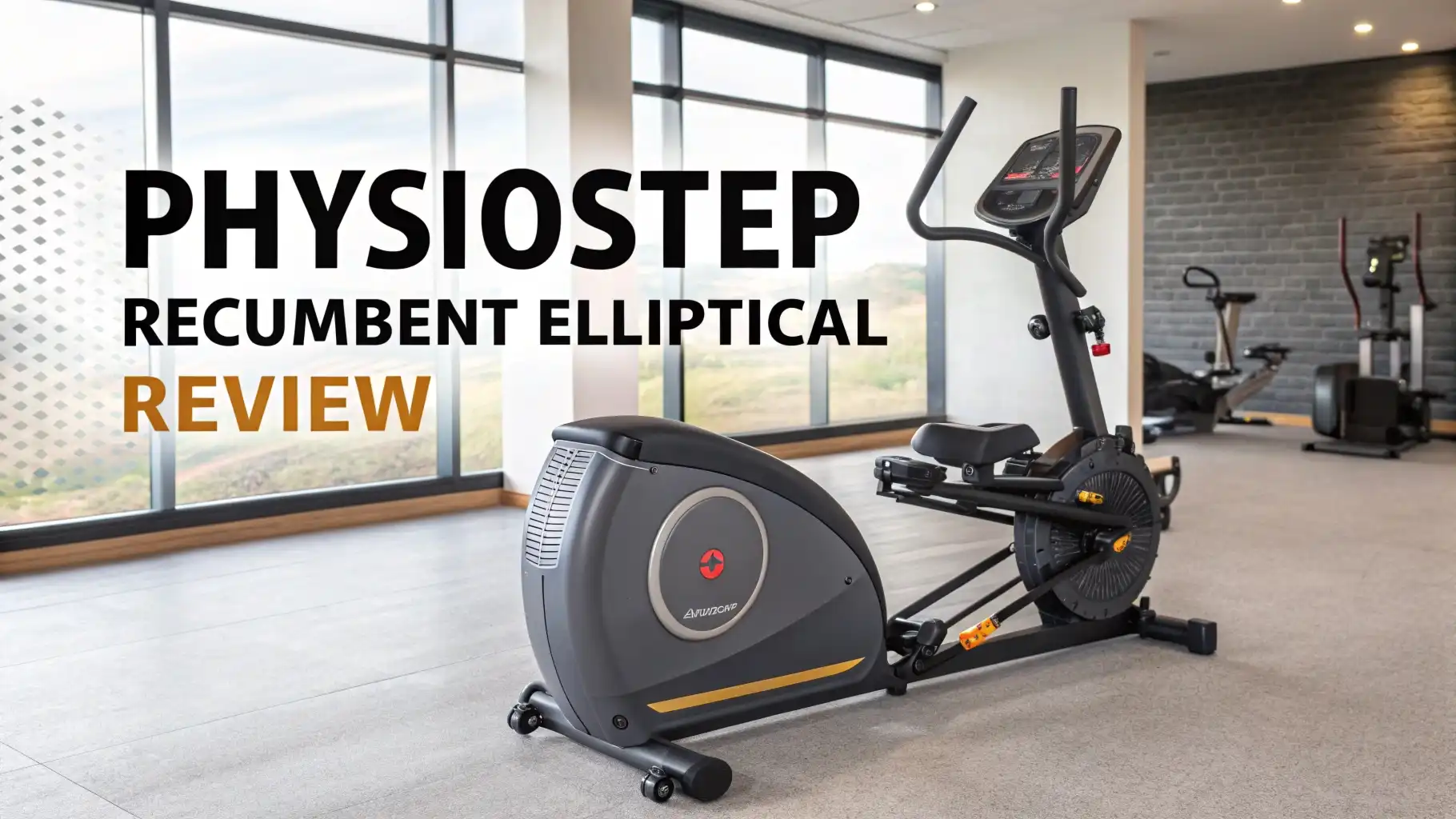
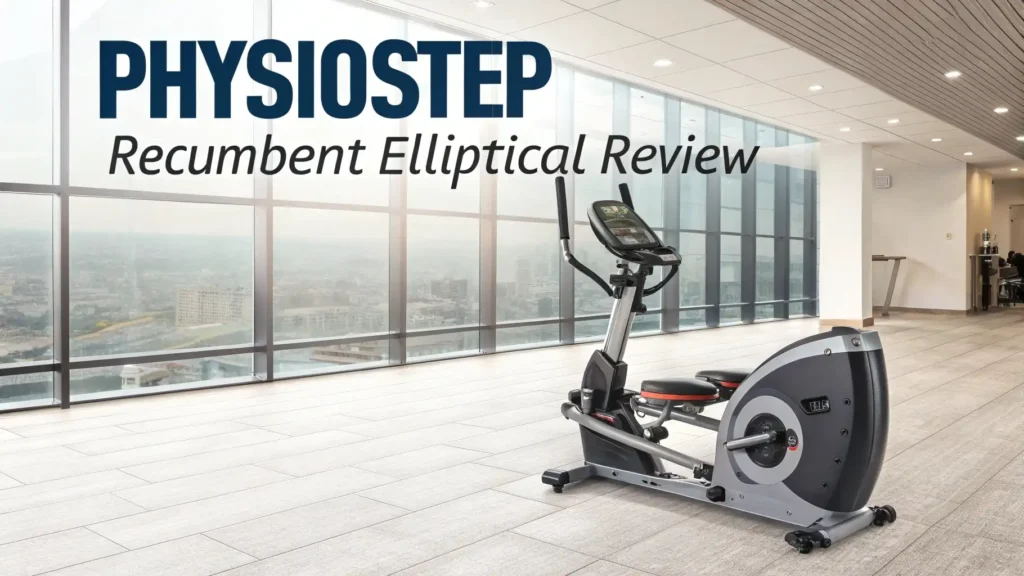
PhysioStep Recumbent Elliptical Review 2026: The Complete Guide
Finding the right exercise equipment can feel overwhelming. You want something that delivers results without killing your joints. You need a machine that actually fits in your home and doesn’t collect dust after two weeks.
The PhysioStep recumbent elliptical has been making waves in the fitness world for years. This machine promises low-impact cardio that works your entire body while keeping you comfortable.
But does it live up to the hype? Can it really help you get fit without aggravating old injuries or causing new ones?
Key Takeaways:
- Low-impact design protects your joints while delivering a full-body cardiovascular workout that burns calories effectively
- Recumbent seating position provides superior back support and reduces strain on knees, hips, and ankles compared to traditional ellipticals
- Suitable for rehabilitation purposes and recommended by physical therapists for post-surgery recovery and chronic pain management
- Premium price point reflects commercial-grade construction and durability, but may exceed budget constraints for casual home users
- Smooth, natural motion mimics walking patterns without the jarring impact that damages joints over time
- Adjustable resistance levels accommodate users from complete beginners recovering from injury to advanced athletes maintaining fitness

What Makes PhysioStep Different From Regular Ellipticals
The PhysioStep stands apart from standard elliptical machines in several important ways. Traditional ellipticals force you to stand upright while exercising. This position can strain your lower back and put pressure on your knees and ankles.
PhysioStep uses a recumbent design that lets you sit while you work out. Your back rests against a comfortable seat. Your legs extend forward to reach the pedals. This position distributes your weight more evenly and removes stress from your joints.
The motion pattern also differs significantly. Regular ellipticals create an oval or circular movement. PhysioStep produces a more natural stride that closely resembles normal walking. Your feet move in a path that feels intuitive and comfortable.
Physical therapists often choose PhysioStep for their clinics. The machine helps patients recover from knee replacements, hip surgeries, and back injuries.
The gentle motion allows people to exercise even when traditional workouts cause pain. This therapeutic quality makes PhysioStep valuable for both rehabilitation and preventive fitness.
Who Should Buy a PhysioStep Recumbent Elliptical
PhysioStep works best for specific groups of people. Older adults find tremendous value in this machine. As we age, our joints become more vulnerable to injury. High-impact exercises like running or jumping can cause damage. PhysioStep provides cardiovascular benefits without the risk.
People recovering from surgery or injury represent another ideal audience. If you’ve had a knee replacement, hip surgery, or lower back procedure, your doctor probably told you to avoid impact.
PhysioStep lets you rebuild strength and endurance safely. Many physical therapy clinics use these machines for exactly this purpose.
Those with chronic pain conditions also benefit greatly. Arthritis sufferers can exercise without aggravating their symptoms. People with fibromyalgia can build fitness gradually without triggering flare-ups. The adjustable resistance lets you start gentle and progress slowly.
Top 3 Alternatives for PhysioStep Recumbent Elliptical


The Science Behind Low-Impact Recumbent Exercise
Low-impact exercise protects your body while still providing significant health benefits. When you run or jump, forces equal to several times your body weight slam through your joints with each step. Over time, this repetitive stress damages cartilage and causes inflammation.
Recumbent elliptical exercise eliminates this impact completely. Your feet never leave the pedals. The smooth, continuous motion creates zero shock waves through your bones and joints. This makes the workout sustainable for decades rather than months or years.
Studies show that low-impact cardiovascular exercise improves heart health just as effectively as high-impact activities. Your heart rate increases. Your lungs work harder. Your muscles burn calories. You gain all the aerobic benefits without the injury risk.
The recumbent position offers additional advantages. Sitting back reduces pressure on your spine by up to 50% compared to standing. Your vertebrae stack properly. Your lower back muscles relax instead of straining to support your upper body weight.
Build Quality and Durability You Can Count On
PhysioStep builds their machines to commercial standards. These ellipticals occupy physical therapy clinics and medical facilities across the country. They endure hours of daily use by multiple patients without breaking down.
The frame construction uses heavy-gauge steel that resists wobbling even during intense workouts. Many home ellipticals shake and rattle under normal use. PhysioStep stays rock-solid because the engineers designed it for professional environments.
The drive system represents another quality indicator. PhysioStep employs a precision-engineered drivetrain with sealed bearings that require minimal maintenance. Cheap ellipticals use plastic components that wear out quickly. PhysioStep uses metal parts built to last for years.
The seat deserves special mention. It features thick padding that maintains comfort during long workout sessions. The backrest provides firm support without feeling hard or uncomfortable. The upholstery material resists sweat and cleans easily.
Comfort Features That Make Exercise Enjoyable
Comfort determines whether you actually use your exercise equipment. PhysioStep includes numerous features that make workouts pleasant instead of painful.
The adjustable seat moves forward and backward to accommodate different leg lengths. Tall users can extend the seat fully backward. Shorter individuals can bring it forward for proper pedal reach. This customization ensures optimal biomechanics regardless of your height.
The seat back reclines to multiple angles. Some people prefer a more upright position. Others want to lean back further for additional lumbar support. You can adjust the angle to match your comfort preference and any mobility limitations you might have.
Cushioned armrests provide stable handholds without creating pressure points. You can rest your arms comfortably during steady-state cardio. The armrests also help you maintain balance when mounting or dismounting the machine.
The pedals feature large platforms with non-slip surfaces. Your feet stay secure throughout the entire range of motion. The size accommodates various shoe sizes without feeling cramped or awkward.
Workout Programs and Resistance Options
PhysioStep offers multiple resistance levels that challenge users at every fitness stage. Magnetic resistance creates smooth, quiet operation without friction or wear. You adjust the difficulty with the push of a button.
Beginners can start with minimal resistance that feels almost effortless. This allows proper form development and gradual conditioning. As your fitness improves, you increase the resistance incrementally.
Advanced users can select high resistance levels that provide substantial cardiovascular challenge. Even serious athletes find sufficient difficulty to maintain their conditioning. The range accommodates everyone from cardiac rehabilitation patients to competitive runners cross-training.
Pre-programmed workouts guide you through structured sessions. Interval programs alternate between higher and lower intensities to maximize calorie burn. Hill simulations gradually increase and decrease resistance to mimic outdoor terrain. These programs add variety and prevent boredom.
Manual mode gives you complete control. You set the resistance level and maintain it throughout your workout. This simplicity appeals to people who want straightforward, consistent exercise without complicated programming.
Space Requirements and Home Setup Considerations
PhysioStep machines occupy significant floor space. You need to plan your room layout carefully before purchasing. The typical footprint measures approximately 5 feet long by 2.5 feet wide. Add extra clearance around all sides for safe mounting and dismounting.
Ceiling height matters too. While you’re sitting during exercise, you still need adequate overhead clearance. Standard 8-foot ceilings work fine for most users. If you’re exceptionally tall, measure to ensure comfortable headroom.
The machine weighs 150 to 250 pounds depending on the model. This substantial weight contributes to stability but creates challenges during delivery and setup. You’ll probably need two or more people to move and position the unit safely.
Most PhysioStep models arrive partially assembled. You’ll need to attach some components and tighten bolts. The process typically takes 1 to 2 hours with basic tools. Some people hire professional assembly services to ensure proper setup.
Floor protection deserves consideration. The weight and movement can damage soft flooring materials. Place a protective mat underneath to prevent indentations in carpet or scratches on hardwood. The mat also catches sweat and makes cleaning easier.
Maintenance and Long-Term Care
PhysioStep machines require minimal maintenance compared to other exercise equipment. The sealed bearing system protects internal components from dust and moisture. You don’t need to perform regular lubrication or complex service procedures.
Basic cleaning represents your primary maintenance task. Wipe down the seat, handlebars, and frame after each use. Sweat contains salt that can corrode metal surfaces over time. A simple wipe with a damp cloth prevents corrosion and keeps the machine looking new.
Check bolts and fasteners periodically. Vibration during use can gradually loosen connections. Tighten any loose hardware every few months to maintain structural integrity and prevent rattling noises.
Inspect the drive belt occasionally. While PhysioStep uses durable commercial-grade belts, they can stretch or wear over years of use. Look for signs of fraying or cracking. Replace the belt if you notice these issues to avoid unexpected failure.
The electronics require no special care. Keep the display clean with a soft, dry cloth. Avoid harsh chemicals that might damage screens or buttons. If the display becomes unresponsive, check the power connection and batteries if applicable.
Real User Experiences and Testimonials
Users consistently praise PhysioStep for pain-free exercise. Many reviewers mention chronic knee pain that prevented them from using other equipment. After switching to PhysioStep, they can work out regularly without discomfort or inflammation.
Post-surgical patients report excellent results. People recovering from knee replacements describe how PhysioStep helped them regain strength and mobility faster than expected. The gentle motion allows early movement without risking the surgical site.
Older adults appreciate the easy entry and exit. Several reviews mention that the step-through design gives them confidence. They don’t worry about falling or getting stuck on the machine. This safety feature encourages consistent use.
Some users criticize the price point. PhysioStep costs significantly more than basic recumbent bikes or standard ellipticals. Budget-conscious buyers struggle to justify the expense, even when they acknowledge the superior quality.
Size complaints appear in multiple reviews. People with limited space find the footprint challenging. Some buyers didn’t measure carefully before purchasing and discovered the machine barely fits in their intended location.
The smooth, quiet operation receives frequent compliments. Users can watch television or listen to music at normal volumes while exercising. Family members in nearby rooms don’t hear disturbing mechanical noises.
Comparing PhysioStep to Other Recumbent Exercise Options
Recumbent bikes cost less than PhysioStep but provide different motion patterns. Bikes work your legs in a circular pedaling motion. This targets your quadriceps and hamstrings effectively. However, bikes offer no upper body involvement. PhysioStep engages your arms, core, and legs simultaneously for more complete fitness.
Standard ellipticals require standing and create more joint stress. They cost less and occupy similar floor space. If you have healthy joints and want to save money, standard ellipticals work fine. People with joint problems, balance issues, or injury history benefit more from PhysioStep’s seated design.
Rowing machines deliver full-body workouts in a seated position. They’re more compact and less expensive than PhysioStep. Rowing requires proper technique to avoid back strain. The motion feels less intuitive than PhysioStep’s walking-like movement. People with lower back problems often struggle with rowing machines.
Recumbent steppers offer another alternative. These machines simulate stair climbing from a seated position. They’re less common and harder to find than PhysioStep. The stepping motion works similar muscle groups but feels different. Some people prefer one motion over the other based on personal preference.
Price Analysis and Value Proposition
PhysioStep machines typically cost $2,500 to $4,500 depending on the model and features. This places them in the premium price category for home fitness equipment. Many people experience sticker shock when they first see these numbers.
Compare this to basic recumbent bikes at $300 to $800. You can buy three or four decent bikes for the price of one PhysioStep. The cost difference reflects the specialized design, commercial-grade construction, and therapeutic benefits.
Standard home ellipticals range from $500 to $2,000 for quality models. Again, PhysioStep costs significantly more. The price reflects the seated design, enhanced joint protection, and superior durability.
Consider the cost of gym memberships over time. A typical gym costs $50 to $100 per month. Over five years, you spend $3,000 to $6,000 on memberships. PhysioStep provides unlimited use at home for a one-time investment in the same price range.
Medical equipment classification partially explains the cost. PhysioStep meets standards for clinical use. The engineering, testing, and certification required for medical facilities add to production expenses. You’re buying equipment designed for professional environments.
The warranty coverage adds value that cheaper machines don’t provide. Extended protection saves money if repairs become necessary. Budget equipment often breaks after the short warranty expires, requiring full replacement.
Making Your Final Decision: Is PhysioStep Right for You
PhysioStep excels for people who need low-impact exercise. If you have joint problems, chronic pain, or mobility limitations, this machine offers exceptional value. The ability to exercise consistently without pain creates long-term health benefits worth the investment.
Rehabilitation patients should strongly consider PhysioStep. Following surgery or injury, proper recovery equipment accelerates healing and prevents complications. The cost seems reasonable when compared to extended physical therapy bills or surgical revisions due to inadequate rehabilitation.
Active older adults who want to maintain fitness for decades will appreciate the joint protection. High-impact exercise might feel fine today but causes cumulative damage. Switching to PhysioStep preserves your joints while maintaining cardiovascular health.
People on tight budgets might need to explore alternatives. If money is your primary concern and you don’t have specific medical needs, less expensive equipment might serve your purposes. PhysioStep represents a luxury that not everyone can afford.
Those with space constraints should measure carefully. The machine’s footprint is substantial. If you’re working with a small room, you might struggle to accommodate PhysioStep comfortably. Consider whether you can dedicate the necessary space permanently.
Serious athletes training for competition might find PhysioStep insufficient for their primary workouts. The low-impact nature that protects joints also limits maximum intensity. However, it works excellently for active recovery days and cross-training to prevent overuse injuries.
Frequently Asked Questions
Can PhysioStep help me lose weight effectively?
Yes, PhysioStep burns calories effectively for weight loss. The full-body motion engages multiple muscle groups simultaneously. You can burn 400 to 600 calories per hour depending on your resistance level and workout intensity. Consistent use combined with proper nutrition produces steady weight loss results. The low-impact nature lets you exercise more frequently without needing recovery days.
How does PhysioStep compare to water aerobics for joint protection?
Both options protect your joints excellently. Water aerobics provides resistance from the water while eliminating impact. PhysioStep offers similar joint protection with added convenience. You can exercise at home regardless of weather or pool availability. Water aerobics requires travel to a facility and works around class schedules. PhysioStep gives you complete control over timing and duration.
Will insurance cover my PhysioStep purchase?
Sometimes insurance companies cover PhysioStep for medical rehabilitation purposes. You need a prescription from your doctor stating that the equipment is medically necessary. Conditions like severe arthritis, post-surgical rehabilitation, or cardiovascular disease might qualify. Contact your insurance provider before purchasing to understand your coverage. Some flexible spending accounts and health savings accounts allow equipment purchases with proper documentation.
Can multiple family members use the same PhysioStep machine?
Absolutely. The adjustable seat accommodates users of different heights. The resistance levels work for various fitness abilities. You can adjust all settings in seconds between users. The high weight capacity supports most adults safely. Multiple people sharing one machine makes the cost more reasonable per person. Just wipe down surfaces between users for hygiene.
How loud is PhysioStep during operation?
PhysioStep operates very quietly compared to most exercise equipment. The magnetic resistance creates no friction noise. The sealed bearing system eliminates squeaking and grinding sounds. You can hear the display beeps and the slight whoosh of your movement through air. Most users can watch television at normal volume or hold conversations while exercising.
Do I need to hire professional assembly for PhysioStep?
Professional assembly isn’t required but can be helpful. The machines arrive mostly assembled with clear instructions. You need to attach some components and tighten bolts. Basic tool skills and mechanical aptitude make assembly straightforward. Having a second person to help with positioning and holding components simplifies the process. If you feel uncomfortable with assembly projects, professional services ensure proper setup.
Can I use PhysioStep if I have artificial knees or hips?
Yes, PhysioStep works excellently for people with joint replacements. Physical therapists frequently use these machines for post-surgical rehabilitation. The smooth, low-impact motion protects your artificial joints while rebuilding strength. Start with low resistance and short durations immediately after surgery. Gradually increase intensity as your doctor recommends.
How long does a PhysioStep machine typically last?
PhysioStep machines last 10 to 15 years with proper maintenance. Some units in clinical settings continue functioning after 20 years of heavy use. The commercial-grade construction and quality components contribute to exceptional longevity. Your machine’s lifespan depends on usage frequency and maintenance quality. Regular cleaning and periodic bolt tightening extend equipment life.