Title Boxing Double Trouble Heavy Bag Stand Review in 2026
You want to throw punches at home. You need a heavy bag. But drilling holes in your ceiling? That sounds like a nightmare waiting to happen.
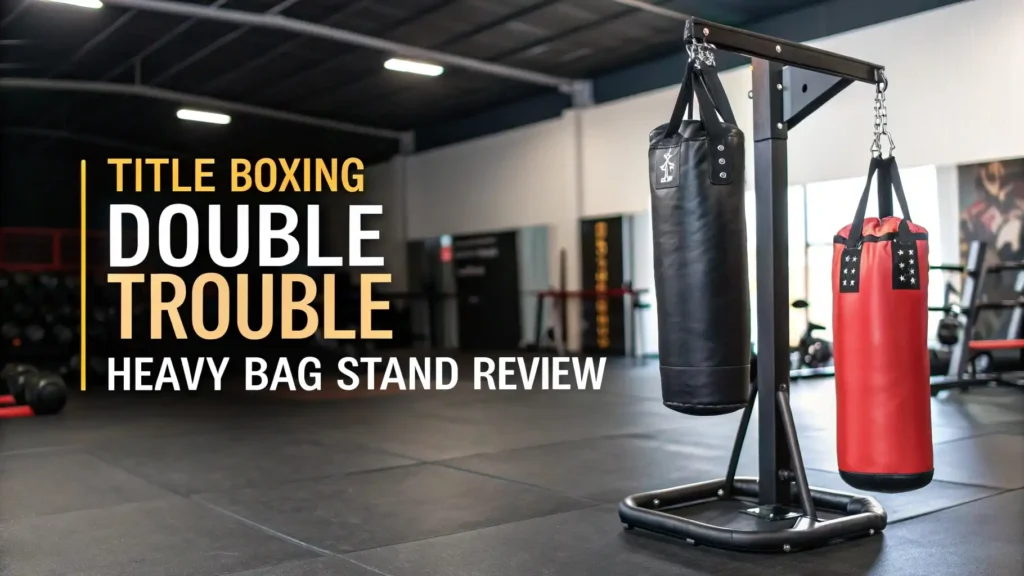
The Title Boxing Double Trouble Heavy Bag Stand promises to solve this exact problem. This freestanding unit holds your heavy bag without touching your ceiling or walls. You fill the base with sand or water. You hang your bag. You start punching.
But does it actually work? Will it wobble when you hit hard? Can it handle your power shots? I spent weeks researching this stand, reading user experiences, and comparing it against competitors. This review will tell you everything you need to know before spending your hard-earned money.
Key Takeaways:
- Freestanding design means zero ceiling damage – You can set this up in any room without drilling holes or installing ceiling mounts, making it perfect for renters and homeowners who want flexibility
- Dual bag capability sets it apart – The unique double arm design lets you hang two bags simultaneously, allowing you to switch between heavy bag work and double end bag training without any setup changes
- Stability depends on proper filling – You must fill the base completely with sand (300-400 pounds recommended) rather than water to prevent wobbling during heavy strikes and power combinations
- Assembly takes about 60 to 90 minutes – The instructions could be clearer, but most users complete setup without major issues using basic tools like wrenches and screwdrivers
- Weight capacity reaches 100 to 125 pounds per arm – This handles standard heavy bags excellently, though professional-grade massive bags exceeding 150 pounds might test the limits
- Price sits in the mid-range category at around $250 to $450 – You pay more than basic single-bag stands but less than premium commercial units, delivering excellent value for the dual-bag functionality

What Makes the Title Boxing Double Trouble Stand Different
The Title Boxing Double Trouble Stand breaks away from traditional single-bag designs. Most stands force you to choose one bag. This stand gives you two attachment points.
The construction uses heavy-duty powder-coated tubular steel. This material resists rust and handles daily punishment. The frame measures approximately 84 inches tall. The footprint spans about 48 inches wide. This size fits most home gyms and garage spaces.
Each arm supports up to 125 pounds. You can hang a heavy bag on one side. Add a double end bag on the other side. Switch between training styles without any equipment changes. This versatility saves time and money.
The base requires filling for stability. Title Boxing includes two bottom D-ring bag anchors in the basic package. These anchors secure your bags to the floor. The design prevents excessive swinging during combinations.
Top 3 Alternative for Title Boxing Double Trouble Heavy Bag Stand


Build Quality and Construction Details
The frame uses 1.5mm to 2mm gauge steel tubing. This thickness provides strength without excessive weight. The steel can handle repeated heavy impacts. You will not see bending or warping during normal use.
Welds connect the steel pieces. Quality welds matter for safety and durability. Users report solid welds on most units. Occasionally someone receives a stand with a weak weld. Title Boxing typically replaces defective units quickly.
The powder coating comes in black. This color hides scuffs and scratches. Glove impacts leave marks on any stand. Black coating keeps your stand looking professional for years.
Weight pegs extend from the base. These pegs accept standard weight plates. Adding weight plates increases stability dramatically. Many users add 50 to 100 pounds of plates. This extra weight stops the stand from sliding during power shots.
Assembly Process and Setup Requirements
Plan for 60 to 90 minutes of assembly time. You need basic tools. A socket wrench set works best. Adjustable wrenches also work. Some users suggest having a second person available.
The instruction manual comes with the stand. Many users complain about unclear instructions. Diagrams sometimes lack detail. Text instructions skip important steps. Reading online reviews before assembly helps fill these gaps.
Start by assembling the base frame. Connect the base pieces first. Make sure all connections are tight. A loose base causes stability problems later. Do not rush this foundation step.
Next attach the vertical posts. These posts support the entire structure. Line up bolt holes carefully. Misaligned holes create frustration. Some users suggest inserting bolts loosely first. Align everything. Then tighten all bolts together.
The cross arms attach near the top. These arms hold your bags. Position them at your desired height before final tightening. Adjusting height after full assembly takes more effort.
Stability Performance During Training
Stability depends entirely on proper base filling. An underfilled base creates a dangerous situation. The stand will rock. Bags will swing wildly. Your training suffers.
Properly filled bases deliver excellent stability. Users report minimal movement during jabs and crosses. Light combinations barely move the stand. This stability lets you focus on technique rather than chasing a moving bag.
Heavy power shots create more movement. Physics cannot be defeated. When you throw a full-power hook into a 100-pound bag, something must move. A properly filled Title Boxing Double Trouble absorbs most impact. The stand might slide an inch or two on smooth floors.
Rubber mats reduce sliding significantly. Place the stand on a thick rubber gym mat. The friction prevents sliding. Many users consider mats essential equipment. The investment pays off in stability and floor protection.
Kicks test stability more than punches. Muay Thai fighters and kickboxers should use extra caution. High kicks into heavy bags generate tremendous force. Users recommend maximum base weight for kicking training. Some add extra weight plates beyond the standard setup.
Weight Capacity and Bag Compatibility
Each arm officially supports up to 125 pounds. This capacity handles most standard heavy bags. Common bag weights range from 70 to 100 pounds. You can use bags at the upper limit without problems.
Bag length affects performance more than weight sometimes. Very long bags (over 5 feet) can drag on the ground. This dragging creates weird swinging motions. Standard 4-foot bags work perfectly. Choose bag length based on your height and training style.
Double end bags work excellently on this stand. These smaller bags weigh only a few pounds. Attach them to one arm. Use the heavy bag on the other arm. This combination maximizes the stand’s versatility.
Speed bags require different mounting. This stand does not include a speed bag platform. You need a different stand for speed bag work. The Double Trouble focuses on heavy bag and double end bag training.
Users report success with various bag brands. Everlast bags fit perfectly. Century bags work well. Title Boxing’s own bags obviously match the stand’s specifications. You can use bags from any manufacturer if dimensions are appropriate.
Space Requirements and Room Placement
The stand requires a 5-foot by 5-foot footprint minimum. This measurement includes the stand itself plus bag swing space. Add extra space if you train with kicks. Kicks require more clearance around the bags.
Ceiling height matters significantly. You need at least 8 feet of ceiling clearance. The stand itself reaches about 84 inches (7 feet). Your bags hang below the arms. Tall bags can reach within inches of an 8-foot ceiling. Higher ceilings provide more flexibility.
Consider your training movement patterns. You do not stand still while hitting bags. Footwork requires space. Moving around the stand demands clearance on all sides. A 10-foot by 10-foot training area works better than minimal spacing.
Wall proximity affects training quality. Place the stand at least 2 feet from walls. Bags swing into walls if positioned too close. Wall impacts damage both walls and bags. Give yourself buffer room.
Doorway access matters for assembly. The stand arrives in boxes. Individual pieces fit through standard doorways easily. The assembled stand can be difficult to move through narrow doorways. Assemble the stand in its final location when possible.
Training Versatility and Workout Options
The dual-bag design opens numerous training possibilities. Hang two different weight bags. Use one for power work. Use the lighter bag for speed training. Switch between bags during the same workout session.
Combination drills benefit from dual bags. Work the heavy bag for 2 minutes. Switch to the double end bag for 1 minute. Repeat this cycle. This training mimics fight conditions better than single-bag workouts.
Different bag types teach different skills. Heavy bags build power and conditioning. Double end bags develop timing and accuracy. Having both options available improves your overall skill development.
Circuit training becomes easier with two bags. Create a station-based workout. Combine bag work with bodyweight exercises. Do push-ups between rounds. Add jump rope between sets. The stand becomes your training anchor point.
Multiple training partners can use the stand simultaneously. Two people can work different bags. This setup works great for boxing gyms with limited space. Home training partners can work out together more effectively.
Maintenance and Long-Term Durability
Regular maintenance keeps your stand performing well. Check bolt tightness monthly. Vibrations loosen connections over time. Carry a wrench during your walk-around. Tighten any loose hardware immediately.
The powder coating requires minimal care. Wipe down the frame occasionally. Use a damp cloth to remove sweat and dust. Sweat can corrode even coated steel over time. Quick cleaning extends lifespan significantly.
Inspect welds during maintenance checks. Look for cracks or separation. Visible weld damage requires immediate attention. Contact Title Boxing if you discover weld problems. They typically replace defective frames under warranty.
The base filling settles over time. Sand compacts with vibrations. Top off your sand level every 6 to 12 months. Maintaining full base weight preserves stability. This simple step prevents performance degradation.
Lubricate adjustable connections annually. The height adjustment mechanism benefits from occasional lubrication. Use light machine oil or silicone spray. Wipe away excess. This maintenance keeps adjustments smooth and easy.
Price Comparison and Value Assessment
The Title Boxing Double Trouble costs approximately $250 to $450. The price varies based on where you purchase. The stand-only version costs less. Bundle packages including bags cost more.
Compare this price against single-bag stands. Quality single-bag stands range from $150 to $300. You pay a premium for dual-bag capability. The premium seems reasonable given the added functionality.
Commercial-grade stands cost significantly more. Professional gym equipment often exceeds $800. These commercial stands offer heavier construction. Home users rarely need commercial-level durability. The Title Boxing Double Trouble provides excellent value for home use.
Factor in the cost of ceiling-mounted systems. Ceiling mounts cost $30 to $100. However, installation requires skills and tools. You might pay a contractor $200+ for professional installation. The freestanding stand eliminates these costs.
The dual-bag feature saves money long-term. You avoid buying a second stand for variety training. You avoid switching bags constantly. Time savings translate to workout consistency. Consistency delivers results.
Common Problems and Solutions
Wobbly performance tops the complaint list. Nearly all wobble issues trace back to insufficient base filling. Solution: Add more sand. Fill the base completely. Do not rely on water alone. Sand provides superior stability.
Assembly difficulties frustrate many buyers. The instructions lack clarity sometimes. Solution: Watch YouTube assembly videos before starting. Other users have posted helpful guides. These videos show steps the manual misses.
Bolt loosening occurs during regular use. Vibrations naturally loosen connections over time. Solution: Schedule monthly maintenance checks. Carry tools during inspections. Tighten any loose bolts immediately. Consider using thread locker on critical connections.
Some users report damaged parts upon delivery. Shipping damages happen occasionally. Solution: Inspect all parts before assembly. Document any damage with photos. Contact Title Boxing immediately. They replace damaged components quickly.
The stand slides on smooth floors during heavy striking. This problem affects all freestanding stands on certain surfaces. Solution: Place the stand on thick rubber gym mats. The friction prevents sliding. Alternatively, add more weight to the base.
User Experience and Customer Feedback
Overall customer satisfaction rates highly. Most users praise the dual-bag functionality. This feature sets the stand apart from competitors. Users appreciate training variety without equipment changes.
Home gym enthusiasts particularly value the stand. The freestanding design suits home environments perfectly. No ceiling damage. No landlord concerns. Easy relocation if needed. These factors matter significantly for home users.
Some users wish for heavier construction. The stand handles rated weights fine. However, very aggressive strikers want more mass. These users typically add significant weight plate loading. This modification addresses their concerns adequately.
Boxing coaches recommend the stand for home practice. It provides legitimate training value. The dual-bag setup mirrors gym equipment layouts. Students can practice at home effectively. This home practice accelerates skill development.
Families enjoy the versatility. Parents and children can train together. Different height adjustments accommodate various ages. Shared training time strengthens family bonds while building fitness.
How It Compares to Ceiling-Mounted Options
Ceiling mounts offer certain advantages. They provide rock-solid stability. No floor space consumption. Maximum bag swing freedom. Professional gyms prefer ceiling mounts for these reasons.
However, ceiling mounts require installation expertise. You must locate ceiling joists accurately. Improper installation creates safety hazards. Ceiling damage becomes permanent. Renters cannot use ceiling mounts typically.
The Title Boxing Double Trouble eliminates installation concerns. You assemble the stand. Fill the base. Start training. No structural modifications required. This simplicity appeals to many home users.
Portability favors freestanding stands dramatically. You cannot move ceiling-mounted systems easily. Once installed, they stay put. Freestanding stands move between rooms. Take them to new homes. Relocate them seasonally.
Ceiling mounts cost less initially. Quality ceiling mounts range from $30 to $100. Installation costs can double or triple this. Freestanding stands cost more upfront but include everything needed.
Frequently Asked Questions
Can the Title Boxing Double Trouble Stand hold two 100-pound bags simultaneously?
Yes, the stand can support two bags up to 125 pounds each. You can hang two 100-pound bags at the same time. However, make sure your base contains maximum sand weight. Two heavy bags create more stress on the frame. Proper base filling becomes even more critical with dual heavy bags. Most users find one heavy bag and one lighter bag provides better balance.
Does the stand work well on carpeted floors?
The stand functions on carpet but performs better on hard floors. Thick carpet allows the stand to sink slightly. This sinking can affect stability during hard strikes. Place a thick plywood board under the stand if carpet is your only option. The board distributes weight more evenly. This solution prevents sinking and improves stability significantly.
How long does the base sand need to settle before training?
You can train immediately after filling the base with sand. Sand does not require settling time like concrete would. However, the sand will compact over your first few training sessions. Top off the sand level after one week of use. This topping ensures maximum base weight. Repeat this process after one month if needed.
Can I use this stand outdoors in my backyard?
The powder-coated steel resists weather reasonably well. Outdoor use works for occasional training. However, constant outdoor exposure reduces lifespan. Rain and humidity cause gradual corrosion. Direct sunlight can fade the coating. Store the stand indoors when not in use. Cover it with a tarp if outdoor storage becomes necessary.
Is professional assembly recommended or can I do it myself?
Most people assemble this stand themselves successfully. You need basic tool skills and patience. The assembly takes 60 to 90 minutes typically. Professional assembly is unnecessary unless you have physical limitations. Watch online videos before starting. These videos clarify steps the manual misses. Having a second person helps during certain steps.
What is the difference between filling with sand versus water?
Sand provides superior stability compared to water. Sand weighs more per volume than water. Sand cannot leak or evaporate. Sand does not freeze in cold garages. Water offers easier filling and removal. However, water creates less stable performance. Most serious users choose sand despite the added effort during filling.
Can children safely use bags mounted on this stand?
Yes, children can use this stand safely with appropriate supervision. Adjust the bag height to match the child’s size. Use lighter bags for younger children. The stand’s stability protects against tip-over concerns when properly filled. Always supervise children during training. Teach proper technique to prevent injury from poor form.
Does the stand require ongoing maintenance beyond initial assembly?
Basic maintenance keeps the stand performing well. Check bolt tightness monthly. Tighten any loose connections immediately. Wipe down the frame after sweaty workouts. Top off base sand if needed. These simple tasks take only minutes. Regular maintenance extends the stand’s lifespan significantly. Neglected stands develop problems over time.