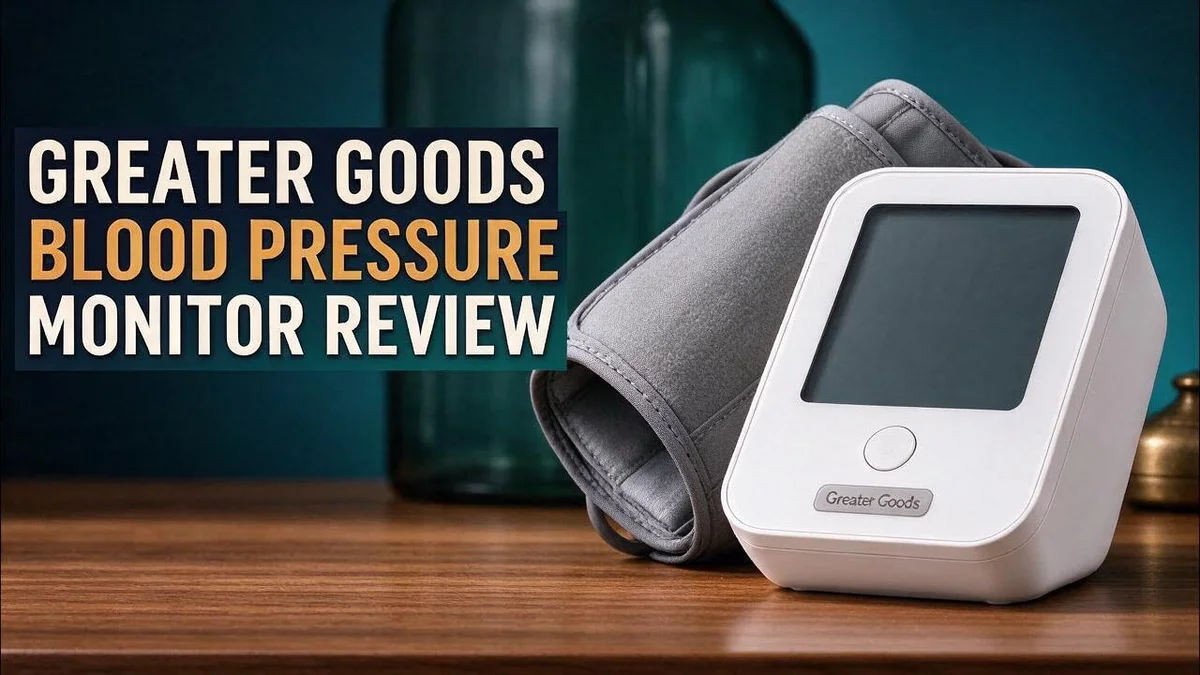
Greater Goods Blood Pressure Monitor Review 2026
Checking your blood pressure at home can feel like a small task, but it matters a lot. Your numbers tell a story about your heart health. Many people want a device that is simple, clear, and easy to trust.
The Greater Goods Blood Pressure Monitor aims to fill that need. It uses an upper arm cuff that feels comfortable during each reading. The large display shows results at a glance, so you always know where your numbers stand.
Want to connect your readings to your phone? This model links through Bluetooth, so your history stays in one place. It fits a wide range of adult arm sizes, from 22 to 42 cm.
Setup feels simple. You can power it with a wall charger or the AAA batteries included in the box. Color coded results also make it easy to spot trends.
In a Nutshell
- Built for home checks: This monitor suits adults who want to track their blood pressure at home.
- Adjustable cuff: The cuff fits arms from 22 to 42 cm and aims for comfort during each reading.
- Large, clear display: Results appear on a big screen, so you can read them without squinting.
- Color coded results: Colors show your reading category at a glance, which makes changes easy to spot.
- Validated listing: The model appears on the validatebp.org listing, which adds confidence in its clinical accuracy.
- Easy to take along: Battery power and a wall charger give you flexible options at home or on the road.
Measurement Accuracy and Validation

- Wirecutter Top Pick: Recognized five times by The New York Times Wirecutter—including 2026—for...
- Smart App & Memory Tracking: Sync to the Balance Health app on iOS and Android to store unlimited...
Last update on 2026-10-26 / Affiliate links / Images from Amazon Product Advertising API Some of the links on this website are affiliate links, which means that at no additional cost to you, I earn a commission if you click through and make a purchase. I only recommend products and services that I believe will add value to my readers. Thank you for your support!
Accuracy matters most when you track blood pressure at home. A reading that runs too high or too low can lead to poor decisions.
Validation is the key test for any home monitor. It means the device passed checks against standard measurement methods. Validation also gives buyers a clear standard to compare models.
You can check this yourself. Search the model number 0040 on the validatebp.org website. The search takes only a minute and gives you direct proof.
The monitor is also listed as FDA-related. This label signals that regulators have paid attention to the product. Read the full listing to confirm the exact status.
Real users also share their experience. Walmart shoppers give the monitor 4.4 out of 5 stars. Star ratings reflect daily use, not lab testing, so they add a helpful second view.
The company also points to a 2026 Wirecutter Top Pick. Since the brand shares this claim, read the original review for full context. Look for details about how the testers measured accuracy.
Good habits improve every reading. Sit quietly for five minutes before you measure. Keep your back supported, feet flat, and arm resting at heart level.
Take two readings about one minute apart. Then average them for a steadier result. Avoid caffeine or exercise for at least 30 minutes before testing.
Test your monitor against your doctor. Bring the device to your next visit. Ask staff to take a reading with their equipment at the same time. Matching numbers show your home results are dependable.
Trends matter more than single numbers, so keep a simple log. Record your readings for several weeks. Careful record keeping gives you a clear picture of your health over time. Then share the log with your doctor, who can spot patterns you might miss.
Cuff Fit and Comfort
A good fit matters as much as the monitor itself. A cuff that feels loose or tight can throw off your numbers. Take a few minutes to check the fit before you start.
Measure around the middle of your bare upper arm. Keep the tape snug but not tight. Write the number down so you can compare it with the size markings on the cuff.
Place the cuff correctly. Wrap the cuff so the bottom edge sits about one inch above your elbow bend. Line up the arrow on the cuff with the artery in your inner arm. Let the tube rest along the inside of your arm.
Relax your arm and body. Rest your arm on a table at heart level. Let it feel supported, not held up. A raised or tense arm can push your reading higher.
Sit in a steady position. Use a chair with back support. Keep both feet flat on the floor. Avoid crossing your legs during the reading.
Watch for pressure points. The cuff should feel firm but never painful. If you notice tingling, numbness, or sharp pain, loosen the cuff. Remove it and rest if the discomfort continues.
Sleeves should not bunch under the cuff. Roll up loose fabric so it does not press on your arm.
Notice how the cuff feels. A comfortable cuff makes it easier to repeat readings at the same time each day. You may stick with the habit longer. Comfort supports consistency, and consistency gives you a clearer picture.
Recheck the fit over time. Arm size can change with weight shifts, aging, or swelling. Check the cuff fit every few months. Replace the cuff if it no longer wraps snugly.
Bring questions to your doctor. Ask your doctor to watch you use the cuff at your next visit. A quick check can confirm you use it the right way.
Display and Everyday Usability
Daily use matters just as much as the numbers. This monitor keeps the steps simple, so you spend less time figuring out the controls.
The Bluetooth connection links the monitor to your smartphone. Readings can move from the cuff to your phone without manual typing.
Manual logging often leads to missed entries or typing errors. A direct connection helps you keep a cleaner record each week.
Sharing results becomes easier too. You can show a trend to your doctor instead of reading numbers from a paper notebook.
Shared households may find it handy. Several family members can take turns using the same device at home.
Quick setup saves time on busy mornings. Charge the unit with the wall charger, or drop in the included AAA batteries as a backup.
Keep your phone close during measurements. This helps the Bluetooth link stay strong from start to finish.
Check that your phone’s Bluetooth stays on before you sit down. A quick check prevents lost readings and wasted minutes.
If a reading does not transfer, you can still note it on paper. Write down the time, the date, and the result.
Storage stays simple when you keep everything together. Store the cuff and the unit in one spot so you never search for them.
Keep the monitor on a shelf near your favorite chair. Easy access makes the habit feel natural rather than like a chore.
Bring your records to each appointment. Doctors often appreciate a simple list of dates and numbers more than a long story.
Pair your routine with a phone reminder. Small habits help you stay consistent over several weeks.
Overall, the display and daily workflow feel approachable. Clear steps and a connected phone make home tracking less stressful.
Top 3 Alternatives
Here are three strong alternatives worth your time.
Omron Platinum

- CONFIDENCE IN EVERY READING: Monitor your heart health with the OMRON Platinum Upper Arm Blood...
- SAFEGUARD YOUR HEART: Screen for unusual heart rhythms every time you check your blood pressure with...

Last update on 2026-09-16 / Affiliate links / Images from Amazon Product Advertising API Some of the links on this website are affiliate links, which means that at no additional cost to you, I earn a commission if you click through and make a purchase. I only recommend products and services that I believe will add value to my readers. Thank you for your support!
The Omron Platinum is a great pick for everyday blood pressure checks. It uses an upper arm cuff that many people find comfortable. The monitor saves readings and calculates averages, so you can spot trends over time. Its Bluetooth feature sends results to a phone app. Many users like the easy setup and the clear display.
Omron 5 Series

- CONFIDENCE IN EVERY READING: Monitor your heart health with the OMRON Bronze Upper Arm Blood...
- SAFEGUARD YOUR HEART: Detect heartbeat irregularities during routine blood pressure measurements...
Last update on 2026-10-19 / Affiliate links / Images from Amazon Product Advertising API Some of the links on this website are affiliate links, which means that at no additional cost to you, I earn a commission if you click through and make a purchase. I only recommend products and services that I believe will add value to my readers. Thank you for your support!
The Omron 5 Series is a smart choice for families. It supports multiple users, so each person keeps a separate history. The device also flags irregular heartbeats during each reading. Its cuff fits a wide range of arm sizes. Shoppers often value its simple buttons and consistent results.
Withings BPM Connect

- Your Cardiovascular Health in Just Seconds – Systolic & diastolic blood pressure + heart rate...
- No More Guesswork – Color-coded feedback instantly shows how your results compare to official US...
Last update on 2026-10-26 / Affiliate links / Images from Amazon Product Advertising API Some of the links on this website are affiliate links, which means that at no additional cost to you, I earn a commission if you click through and make a purchase. I only recommend products and services that I believe will add value to my readers. Thank you for your support!
The Withings BPM Connect brings modern connectivity to your routine. It links with the Health Mate app over Wi-Fi or Bluetooth. Your readings appear in charts that are easy to share with a doctor. The color screen makes it simple to read results at a glance. If you want data that syncs automatically, this model fits well.
Smartphone App and Data Tracking
Your phone can become a clear health log. Many people use a smartphone app to see the bigger picture. One single reading tells only part of the story.
Trends matter more than any one number. Over a week or two, you can spot whether your numbers climb in the morning or ease after a walk.
Look for patterns in the history view. Notice if readings jump on stressful workdays, after poor sleep, or after salty meals.
Small shifts deserve attention. A slow rise across several weeks may signal that your routine needs a closer look.
Add simple notes to your records. Write down medicine times, caffeine, exercise, or stress levels next to each reading.
Context turns raw numbers into useful insight. Your doctor can read these details more easily than a list of bare figures.
Protect your health data carefully. Use a strong phone passcode and lock your screen when you step away.
Keep your app and phone updated. Updates often fix bugs and improve security, so your records stay safe and reliable.
Set a weekly review time. A calm Sunday check of averages helps you stay informed without feeling overwhelmed.
Consistency builds better records. Measure at similar times each day. Gaps in your data can hide important changes.
Clear data also reduces guesswork at home. When a reading feels off, you can review your recent trends and follow up calmly.
Use your trends to guide better questions for your care team. Your phone also helps you spot progress after lifestyle changes, which can keep motivation strong during tough weeks.
Remember that an app supports care but never replaces it. Contact your doctor if readings stay high or if you notice symptoms like chest pain, severe headache, or shortness of breath. Call emergency services right away in an emergency.
Portability and Power Options
Life does not always stay in one place. Many people travel for work, visit family, or spend weekends away. A blood pressure monitor that goes along with you can keep daily checks on track.
The Greater Goods monitor suits people who move often. It fits easily into a travel bag. Packing it takes little effort.
Power is the next thing to plan. The monitor runs on a wall charger or AAA batteries. Each option suits a different setting, so it helps to know which one you will use.
Wall charger for home base. When you stay near an outlet, the charger works well. Plug it in each evening, and the unit stays ready for the next morning reading.
AAA batteries for on the go. Batteries suit trips where outlets are hard to find. Keep a spare set in your bag so you never miss a reading.
Before you leave home, confirm the unit has power. A quick check can prevent a missed reading in a hotel room or airport. Many people make this a simple habit before every trip.
Pack the monitor in the same spot. Keeping it in one pocket of your bag helps you avoid leaving it behind. A fixed spot also saves time when you pack in a hurry.
Think about outlet access. Some hotel rooms have outlets near the desk but not near the bed. Plan where you will take each reading before you start.
Rotate your power sources. Use the charger when you return home. Switch to batteries when you travel, so the device stays ready in both places.
Keep spare batteries on hand. Stock a fresh pack at home so you never run short. Label the pack so family members know where to find it.
Plan for changing environments. Cold rooms or long car rides can change your routine. Bring the monitor along and keep it close to you.
Good power planning means fewer gaps in your records. Small habits like these make a real difference over time.
Pros and Cons
Pros
– Comfortable cuff that adjusts to fit many arms.
– A clean, simple screen that is easy to read.
– Validated for clinical accuracy on validatebp.org.
– Color-coded results show your status at a glance.
– Walmart shoppers rate it 4.4 out of 5 stars.
Cons
– The standard cuff only fits arms from 22 to 42 cm.
– The Wirecutter award is manufacturer cited, so check it yourself.
– Independent reviews are limited in current research.
– Full tracking depends on keeping your smartphone nearby.
Who Should Buy It
This monitor suits adults who want a simple way to check blood pressure at home. It works well for people who dislike confusing menus and tiny buttons.
New home users often feel unsure about their first readings. This device helps them start with less stress. Each step is clear, so the process feels calm and steady.
People building a new health habit also benefit from a friendly device. Small wins keep motivation high. A quick reading each day can become a routine that feels natural.
Family caregivers may find it especially useful. A son or daughter can help a parent take readings each week. One device can support more than one adult in the same home, as long as each person’s arm fits the cuff.
People working with a doctor often need reliable numbers for each visit. The monitor gives a clean set of results to share. Bring your log to every appointment, and follow your care plan closely.
Busy people also gain from this style of monitor. A reading takes only a few minutes, so it fits between work tasks, errands, or family time. Short routines are easier to keep.
Anyone with a heart rhythm concern should speak with a doctor first. Home readings can offer helpful clues, but they do not replace medical advice. Ask your provider which numbers matter most for you.
Who may want a different choice? People who prefer wrist readings may like another style. Anyone who needs constant tracking may need a device built for that purpose. Take a quick arm measurement first, so you know whether your arm falls within the range.
Still unsure? Think about your daily routine, your family needs, and your doctor’s advice. A short list of goals makes the decision easier. Then you can choose with confidence.
Final Verdict
The Greater Goods monitor earns a strong place on your shortlist. It suits people who want a simple habit, not a complicated gadget.
One reading tells you very little. Your numbers matter most when you track them over days and weeks. This monitor makes that routine easy to keep.
Smartphone tracking helps you spot patterns. Bring those patterns to your doctor instead of guessing from memory.
Good habits make the biggest difference. Sit quietly for five minutes before each reading. Keep your feet flat and your arm supported at heart level.
Take readings at the same time each day. Consistent timing makes your trends easier to read.
Ask your doctor how to read your results. Every person has different targets. A professional can explain what your numbers mean for you.
Think about your goals before you buy. Ask yourself how often you plan to check. Ask whether you want a device that grows with your routine.
Expect a small learning curve at first. Your early readings may feel strange. Stay patient and keep recording. Most people settle into the habit within a couple of weeks.
Keep a simple log. Write down the date, time, and number. A notebook or a notes app works well. Review your log every week to spot changes early. Share the log at every visit.
Know when to call your doctor. Sudden jumps in your numbers deserve attention. Do not wait for your next visit if you feel unwell.
Bottom line: This monitor offers a friendly and dependable option for everyday home checks. It works best for people who commit to regular readings and share results with their care team.
Your monitor should feel like a helpful partner, not a source of stress. Use it with care, and let the numbers guide better choices. That steady approach brings the best results.
Frequently Asked Questions
Does this monitor run on batteries or a charger?
The Greater Goods monitor works with a wall charger, and AAA batteries come in the box. You can plug it in at home or use batteries when you need power away from an outlet. Keep the charger nearby so your device stays ready for daily checks.
Is this monitor easy to bring on trips?
Yes, it is a good choice for travel. Its light build makes it simple to carry in a bag. Pack the charger and extra batteries too, so you can take readings on the road without worry.
What model number should I look for?
Look for Model 0040 on the box or label. This model appears on the official validation listing. Checking the number helps you confirm that you have the right device before you start tracking your numbers.
Can children use this blood pressure monitor?
This monitor is made for general adults. Children have different blood pressure ranges, so ask a doctor first before you use it on a child. A doctor can also tell you which device fits a young person’s needs best.

Hi, I’m Elowen Porter, the creator of GreenLight.blog.
I share honest reviews and insights on supplements and Amazon health products to help you make smarter wellness choices.
With a passion for natural living and evidence-based products, I dig deep to find what truly works.
My goal is to simplify your supplement search with real results and trusted recommendations.
Let’s make healthy living a little easier—one product at a time.