Samsung Sleep Tracker Review 2026: Worth It?
Sleep tracking has become the main reason people buy wearables. Samsung noticed that shift years ago, and its 2026 lineup shows it. The Galaxy Ring and the Galaxy Watch 8 both promise to explain why you wake up tired.
I tested both devices across several months of real nights. That means restless nights, travel nights, sick nights, and a few very good nights too. This review shares what I found, including the parts Samsung would rather you skip.
You will learn how the sleep score works, how accurate the data feels, and where the tracking falls apart. You will also see honest complaints from long term owners. By the end, you will know if a Samsung sleep tracker fits your bedroom or your budget.
In A Nutshell:
- The Galaxy Ring is the better pure sleep tracker. It sits on your finger, stays quiet, and never presses into your wrist. Side sleepers notice the difference immediately. Sleep stage data also stays more stable than watch data on restless nights.
- The Galaxy Watch 8 offers more sleep features. You get snore recording, sleep apnea screening, Bedtime Guidance, and Sleep Coaching in one package. The tradeoff is comfort and charging habits.
- No subscription is required. Samsung includes every premium sleep metric for free. Oura and Whoop both charge monthly fees, so Samsung saves you real money over two years.
- Battery degradation is a genuine problem. Several owners report the Galaxy Ring dropping from seven days to two days after roughly a year. That complaint appears too often to ignore.
- You need a Galaxy phone for the full experience. Non Samsung Android phones lose features. iPhone users lose almost everything, since Samsung Health does not support iOS properly.
- Accuracy is good, not clinical. Both devices estimate sleep stages well enough for trends. Neither replaces a sleep study or a doctor visit.
What Does The Samsung Sleep Tracker Actually Measure?
![SAMSUNG Galaxy Ring, AI Smart Ring, Size First w/Sizing Kit, No App Subscription, Fitness Monitor, Sleep Tracker, Up to 7-Day Battery, Size 8, Titanium Gold [US Version, 1Yr Manufacturer Warranty]](https://greenlight.blog/wp-content/plugins/aawp/public/image.php?url=YUhSMGNITTZMeTl0TG0xbFpHbGhMV0Z0WVhwdmJpNWpiMjB2YVcxaFoyVnpMMGt2TkRGU01WQnJiVU5SZUV3dWFuQm58MTc4ODMzMTc2Nw=)
- SIZE BEFORE YOU BUY: Galaxy Ring sizes differ from standard ring sizes; Purchase the Samsung Galaxy...
- ANDROID ONLY: Galaxy Ring is compatible with Android smartphones.

Last update on 2026-08-18 / Affiliate links / Images from Amazon Product Advertising API Some of the links on this website are affiliate links, which means that at no additional cost to you, I earn a commission if you click through and make a purchase. I only recommend products and services that I believe will add value to my readers. Thank you for your support!
Samsung uses three sensor types across its wearables. An optical bio signal sensor reads your pulse and blood oxygen. An accelerometer tracks movement. A skin temperature sensor watches overnight warmth changes.
The software combines these signals into sleep stages. You get awake time, light sleep, deep sleep, and REM sleep in a color coded chart each morning.
Samsung Health then layers extra numbers on top. Sleep latency shows how long you took to fall asleep. Sleep consistency shows whether your bedtime wanders. Physical recovery and mental recovery rate how well your body reset.
The most useful metric for me was blood oxygen during sleep. A steady line means calm breathing. Repeated dips suggest something interrupting your airway.
Skin temperature deserves attention too. My readings rose almost a full degree two nights before I felt a cold coming. That early warning happened three separate times, which surprised me.
Heart rate data feels solid on both devices. Resting heart rate during sleep matched my chest strap within two beats most nights.
Movement tracking is where things get shaky. Both devices sometimes log quiet reading in bed as light sleep. If you lie still with a book, expect a few phantom minutes.
Samsung also builds an Energy Score each morning. It blends last night’s sleep with recent activity and sleeping heart rate. That single number became my daily check in.
Samsung Galaxy Ring Review
The Galaxy Ring became my favorite sleep tracker within a week. It weighs about three grams, so you forget it exists after two nights.
The titanium build handled real life well. Mine picked up light scuffs on the outer edge after months of gym sessions and dishwashing. No dents, no cracks.
Water resistance sits at 10 ATM. You can shower, swim, and wash up without removing it. That matters for sleep tracking, because you never need to break the wearing habit.
Sleep data quality impressed me most. The ring caught my 3 a.m. wake ups accurately, including short ones I barely remembered. Deep sleep readings tracked closely with how heavy my mornings felt.
Samsung offers nine sizes, from 5 to 13, in black, silver, and gold. The sizing kit ships first, and you should absolutely use it. Ring sizing is the single biggest cause of returns.
Battery life started near seven days for me. That is genuinely convenient, since charging once a week never interrupts sleep tracking.
Now the honest part. My battery weakened noticeably over months. Other owners report the same slide, some reaching only two days after a year of wear.
There is no GPS, no screen, and no real time heart rate monitoring. The ring reads your body in intervals, not continuously.
The double pinch gesture dismisses alarms and takes photos. It only works properly with Galaxy phones, which feels limiting.
Samsung Galaxy Watch 8 Review

- WHY GALAXY WATCH8: Advanced health and sleep tracking features.* A lighter, more snug design for all...
- SLEEP SMARTER. LIVE BETTER: Energize your days with a great night’s rest using Advanced Sleep...
Last update on 2026-08-18 / Affiliate links / Images from Amazon Product Advertising API Some of the links on this website are affiliate links, which means that at no additional cost to you, I earn a commission if you click through and make a purchase. I only recommend products and services that I believe will add value to my readers. Thank you for your support!
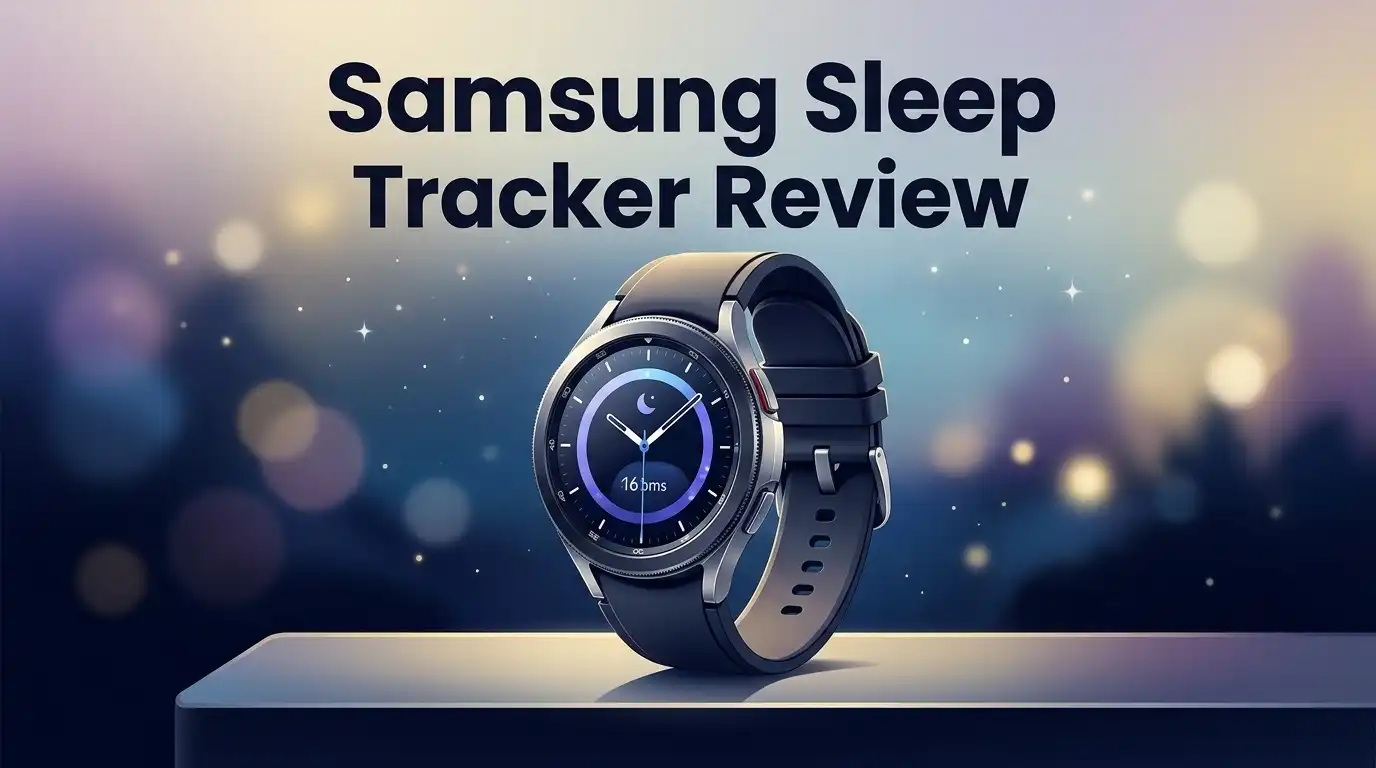
The Galaxy Watch 8 takes a different approach. It gives you every sleep feature Samsung makes, plus a screen to view them.
The cushion shaped design sits flatter than older models. It still feels bulky at night compared to a ring, especially for stomach sleepers.
Sleep apnea screening is the headline feature. The watch monitors blood oxygen across two nights and flags patterns that suggest moderate or severe obstructive sleep apnea. It received FDA clearance, which raises confidence.
Snore detection uses your phone microphone beside the bed. It records clips and shows a snore timeline. Hearing yourself is uncomfortable but useful.
Sleep Coaching runs as a multiweek program. It assigns you a sleep animal, sets small goals, and checks progress. My first result was a nervous penguin, which felt accurate and slightly insulting.
Bedtime Guidance suggests an ideal sleep window based on your recent patterns. It nudges you before your body crashes.
The Antioxidant Index and Vascular Load features add health context beyond sleep. Neither directly improves sleep accuracy, but both encourage daily engagement.
Battery is the weak point. You typically charge every day or two, which competes with overnight wear. I lost several nights of data to a dead watch.
Wrist based sleep staging also drifts on restless nights. Arm movement confuses the algorithm more than finger movement does.
Top 3 Alternative for Samsung Galaxy Ring

- ACCURACY - SMART SENSING - Oura tracks over 50 health metrics, including sleep, activity, stress...
- ACCURATE SIZING ESSENTIAL - Oura Ring 4 uses unique sizing different from standard jewelry rings...
Last update on 2026-08-21 / Affiliate links / Images from Amazon Product Advertising API Some of the links on this website are affiliate links, which means that at no additional cost to you, I earn a commission if you click through and make a purchase. I only recommend products and services that I believe will add value to my readers. Thank you for your support!
Oura Ring 4

- EVERYTHING YOU NEED IS INCLUDED: Your WHOOP purchase includes a 12-month WHOOP One membership, a...
- CONTINUOUS MONITORING: WHOOP monitors your most important metrics, including sleep, heart rate...
Last update on 2026-08-18 / Affiliate links / Images from Amazon Product Advertising API Some of the links on this website are affiliate links, which means that at no additional cost to you, I earn a commission if you click through and make a purchase. I only recommend products and services that I believe will add value to my readers. Thank you for your support!
WHOOP 5.0

- Fitbit Charge 6 tracks key metrics from calories and Active Zone Minutes to Daily Readiness and...
- See your heart rate in real time: Just link your Charge 6 to compatible exercise machines, like...
Last update on 2026-07-25 / Affiliate links / Images from Amazon Product Advertising API Some of the links on this website are affiliate links, which means that at no additional cost to you, I earn a commission if you click through and make a purchase. I only recommend products and services that I believe will add value to my readers. Thank you for your support!
Google Fitbit Charge 6
Unboxing Experience: What Arrives In The Box
The Galaxy Ring unboxing feels premium and slightly theatrical. The outer sleeve slides off to reveal a compact white box with an embossed lid.
Inside, the ring sits inside a translucent charging case shaped like a small dome. The case looks like jewelry packaging rather than tech packaging.
Lifting the case triggers a small moment of delight. The ring glows briefly through the clear shell when it makes contact with the pins.
You also get a short USB C cable and a folded quick start guide. No wall adapter is included, which is normal now but still mildly annoying.
The sizing kit arrives separately, and it matters. Nine plastic dummy rings let you test fit for 24 hours before Samsung ships the real product. Skipping that step usually ends badly.
The Galaxy Watch 8 box is thinner and more conventional. You find the watch, one silicone band in two lengths, and a small wireless charging puck.
The band swap system uses a new one click mechanism. It feels secure, though third party band options remain limited.
Setup took me about eight minutes per device. Samsung requires two apps, Samsung Health and Samsung Wearable, which feels like one app too many.
Pairing was smooth on a Galaxy phone. On a non Samsung Android phone, expect extra permission screens and a few missing options.
How The Samsung Sleep Score Works
Samsung scores your night from 0 to 100. The scale is easy to read once you learn the bands.
Scores from 0 to 59 need attention. Scores from 60 to 74 count as fair. Scores from 75 to 84 count as good. Scores from 85 to 100 count as excellent.
Four factors feed the score. Total sleep time carries the most weight, followed by sleep cycle balance, awake time, and physical recovery based on heart rate.
My results matched my energy honestly. Six or seven hours put me in the low 80s. Late nights pushed me into the 50s and 60s, and I felt every point.
The score updates within a minute of waking. You can tap into each factor to see why you lost points, which teaches you your own patterns.
Samsung avoids one common trap here. It does not reward long time in bed alone, so lying awake for an hour lowers your score properly.
The weakness is context blindness. The algorithm does not know about your newborn, your night shift, or your late espresso.
Comparing scores between people is pointless too. Different sensors and different algorithms produce different numbers, so treat your score as a personal baseline only.
Accuracy Compared To Oura, Whoop, And Sleep Labs
I ran the Galaxy Ring and Galaxy Watch 8 alongside other trackers for two weeks. The results were closer than marketing suggests.
Total sleep time was the most reliable metric everywhere. All devices landed within roughly fifteen minutes of each other most nights.
Sleep stage estimates varied much more. Samsung tended to report more deep sleep than Oura on identical nights. Whoop usually sat between the two.
Independent research on consumer wearables tells a consistent story. Modern trackers detect sleep versus wake with roughly 85 to 95 percent agreement against clinical polysomnography.
Stage classification drops much lower, often near 50 to 70 percent accuracy. That gap applies to Samsung, Oura, Whoop, and Apple equally.
Heart rate accuracy favored the ring. Finger sensors get cleaner blood flow readings than wrist sensors during stillness.
Some Galaxy Ring owners report frustrating gaps in overnight heart rate data. One reviewer saw the line flatline for stretches, which points to occasional sensor contact issues.
The practical conclusion is simple. Use Samsung data to spot weekly trends, not to judge single nights. Trends are where these devices genuinely earn their price.
What The Samsung Sleep Tracker Does Not Do Well
Authentic reviews name the flaws, so here are mine after months of nightly use.
Battery degradation on the Galaxy Ring is the biggest issue. Multiple owners describe dropping from a full week to two or three days within a year. Batteries in rings cannot be replaced.
The iPhone situation is worse than most buyers expect. Samsung Health support on iOS is limited, so iPhone owners should look elsewhere entirely.
Cross platform gaps continue on Android. Non Samsung phones lose gesture controls and some coaching features, which weakens the value.
The Samsung Health app design frustrates data lovers. Menus bury useful charts, long term comparisons are shallow, and exporting data is clumsy.
Sleep apnea screening only works on the watch, not the ring. Buyers often assume both devices share every feature, and they do not.
The watch cannot survive multiple nights without charging. That single limitation breaks tracking consistency, which is the whole point of sleep data.
Neither device offers real time heart rate monitoring during sleep. Samples happen at intervals, so brief events can slip through.
Finally, coaching advice stays generic. It repeats standard sleep hygiene tips such as consistent bedtimes and less screen time. Useful, yes, but not personal.
Pros And Cons Of The Samsung Sleep Tracker Lineup
Pros
- No subscription fee for any sleep metric, coaching program, or health score, which saves roughly 200 dollars per year compared with Oura or Whoop.
- Excellent comfort on the Galaxy Ring at about three grams, so side sleepers and stomach sleepers forget they are wearing it.
- FDA cleared sleep apnea screening on the Galaxy Watch 8 gives real medical value that most trackers still lack.
- Sleep Coaching and Bedtime Guidance turn raw numbers into weekly actions, which helps beginners actually change habits.
- Strong build quality with titanium construction and 10 ATM water resistance, so daily wear causes little visible damage.
- Energy Score works well as a single morning summary of readiness, and it matched my real energy levels closely.
- HSA and FSA eligibility applies to many purchases, which lowers effective cost for US buyers.
Cons
- Ring battery weakens noticeably over months, with some owners reporting only two days of use after a year.
- iPhone support is effectively missing, making both devices poor choices for Apple households.
- Watch needs nightly charging, which creates gaps in the sleep record you are trying to build.
- Sleep stage accuracy stays estimated, not clinical, so single night readings can mislead you.
- Samsung Health app feels shallow for anyone who enjoys deep data analysis or long term exports.
- Full features require a Galaxy phone, which limits value for other Android users.
- Pricing overlaps awkwardly, since the ring costs about as much as a full smartwatch.
Price And Value In 2026
The Galaxy Ring launched near 400 dollars and now trades lower. Street prices often land between 250 and 330 dollars depending on size, color, and sales.
The Galaxy Watch 8 sits in similar territory. The 40mm Bluetooth model frequently drops below 300 dollars during promotions.
Value depends heavily on subscriptions. Oura charges roughly 6 dollars monthly after purchase. Whoop bundles hardware into memberships that cost far more across two years.
Run the two year math and Samsung wins comfortably. A 300 dollar ring with free software beats a 350 dollar ring with 144 dollars of added fees.
Battery degradation complicates that win. If your ring truly fades to two days within a year, your effective ownership window shrinks.
My advice is to buy on sale rather than at launch price. Samsung discounts wearables aggressively during major shopping events.
Check HSA and FSA eligibility before checkout too. Many US buyers can use pretax funds, which cuts real cost by a meaningful margin.
Trade in offers add more savings. Samsung regularly accepts older watches and phones against ring purchases.
Who Should Buy It And Who Should Skip It
Buy the Galaxy Ring if sleep is your main priority and you own a Galaxy phone. Comfort and free software make it an easy recommendation.
Buy the Galaxy Watch 8 if you suspect sleep apnea. The screening feature alone justifies the purchase for people who snore heavily or wake up gasping.
Buy either device if you hate subscriptions. Samsung remains the strongest no fee option in premium sleep tracking right now.
Skip both if you use an iPhone. The software experience will disappoint you within days.
Skip the ring if you lift heavy weights regularly. Barbells press metal rings into your fingers, and many lifters remove them constantly.
Skip Samsung entirely if you want research grade data exports. Oura and Whoop both offer deeper analysis tools for data enthusiasts.
Consider a cheaper band if budget matters most. A Fitbit Charge 6 tracks sleep decently for under half the price.
Athletes chasing recovery precision should look at Whoop. Its strain and recovery model remains more detailed than Samsung’s Energy Score.
For most ordinary sleepers, though, Samsung hits a genuinely good balance of comfort, cost, and clarity.
Frequently Asked Questions
Is the Galaxy Ring more accurate than the Galaxy Watch 8 for sleep?
The ring generally produces cleaner overnight heart rate data because finger sensors read blood flow better during stillness. The watch offers more features, including apnea screening and snore recording. For pure sleep stage tracking, the ring holds a small edge.
Does the Samsung sleep tracker need a monthly subscription?
No. Samsung includes every sleep metric, coaching program, and health score at no extra cost. That policy remains one of the strongest reasons to choose Samsung over Oura or Whoop.
Can the Galaxy Watch 8 really detect sleep apnea?
It screens for signs of moderate to severe obstructive sleep apnea using blood oxygen patterns across two nights. The feature holds FDA clearance in the United States. It is a screening tool only, so a positive result means you should see a doctor.
Will the Samsung sleep tracker work with an iPhone?
Not properly. Samsung Health support on iOS is very limited, and most sleep features will not function. iPhone owners should choose Oura, Whoop, or the Apple Watch instead.
How long does the Galaxy Ring battery last overnight?
A single night uses roughly 10 to 15 percent of the battery when new. That gives about a week of tracking per charge. Expect that number to shrink as the battery ages.
Should I wear the ring on my index finger or ring finger?
Samsung recommends the index finger for the best sensor contact. Many owners wear it on the ring finger successfully, though gesture accuracy can drop slightly.

Hi, I’m Elowen Porter, the creator of GreenLight.blog.
I share honest reviews and insights on supplements and Amazon health products to help you make smarter wellness choices.
With a passion for natural living and evidence-based products, I dig deep to find what truly works.
My goal is to simplify your supplement search with real results and trusted recommendations.
Let’s make healthy living a little easier—one product at a time.