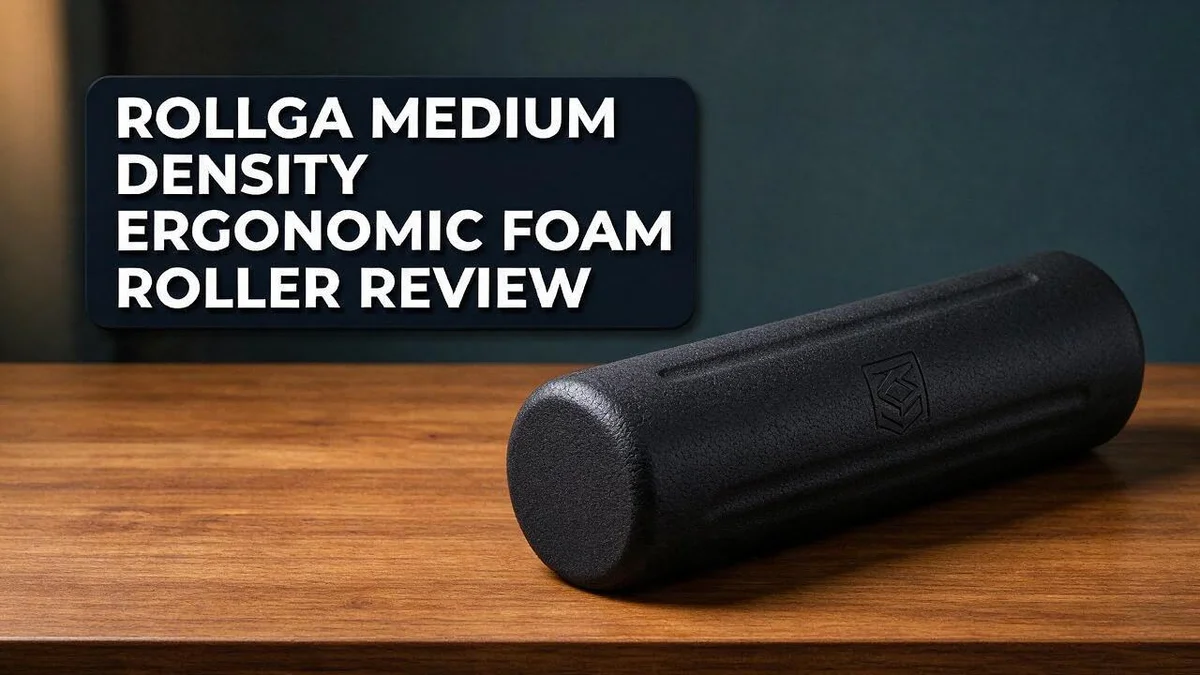
Rollga Medium Density Ergonomic Foam Roller Review 2026
Sore muscles can slow you down fast. A good foam roller helps you ease tension and move better. The Rollga Medium Density Ergonomic Foam Roller aims to do exactly that.
Many people struggle to find a roller that feels right. Some rollers feel too soft, while others feel too harsh. This one sits in a balanced middle ground.
Its contoured shape cradles your bone structure. It targets the muscles and fascia instead of the bones. Reviewers often mention the targeted pressure on the neck and lats.
The brand also shares claims of about 22 percent more flexibility and at least 6 percent less muscle soreness. These numbers come from the manufacturer, so treat them as a starting point. Keep reading to see if this roller deserves a spot in your routine.
In a Nutshell
- Medium density foam offers a balanced feel. It is firm enough to work deep into tissue but soft enough for beginners to use comfortably.
- It targets muscles instead of bones. Your body gets pressure where it needs relief most, so every roll feels purposeful.
- Reviewers praise its focused pressure on the neck and lats. Many people say these areas respond well after a long day at a desk or a tough workout.
- It packs light and travels easily. You can toss it in a gym bag, a suitcase, or a car trunk for quick recovery on the go.
- Many people use it for more than one purpose. It fits into warm ups, cool downs, and everyday stretching routines without any extra gear.
- Start slowly during your first few sessions. One user overdid it on day one, so easing in helps you avoid soreness and keeps the experience comfortable.
- Some reviewers find it less effective on the back. If your back needs the most attention, you may want to pair it with another roller.
Build and Materials

- Back Pain Relief - Specially contoured for back pain, the unique patented design supports the spine...
- Enhanced Muscle Recovery - Experience faster muscle recovery with targeted pressure; ideal for...
Last update on 2026-11-03 / Affiliate links / Images from Amazon Product Advertising API Some of the links on this website are affiliate links, which means that at no additional cost to you, I earn a commission if you click through and make a purchase. I only recommend products and services that I believe will add value to my readers. Thank you for your support!
The build of the Rollga starts with its foam core. The medium density foam sits in a useful middle zone. It feels firm without feeling harsh on sensitive areas.
Foam quality shapes how a roller performs over time. Dense foam holds its form better than loose, airy foam. This means the surface keeps pressing evenly after many uses.
Think of the foam as the engine of the whole tool. Good materials help you roll with confidence. You can trust the roller to support your weight without caving in.
The outer surface also matters for daily use. A smooth finish makes cleanup quick after a gym session. Dirt and sweat cling less to a smooth shell.
Durability comes from how the foam resists wear. A quality foam should keep its shape after months of regular use. Check the roller for dents or flat spots over time.
The roller keeps steady on a mat during each roll. A stable base helps beginners keep their balance. That steadiness lets you focus on your breathing and form.
Build quality also affects comfort on the body. Even density across the length keeps every pass consistent. Your muscles get the same feel from start to finish.
Build details also shape how often you will use the roller. A sturdy design invites daily use after workouts. Long lasting materials reduce the need for frequent replacements.
Think about your routine before you choose a roller. Athletes, office workers, and runners all place different demands on foam. The Rollga build covers a wide range of needs.
Look closely at the foam texture when you inspect a roller. The surface should feel even, without soft spots or hard ridges. Good texture supports smooth rolling on sore areas.
A solid build gives you confidence from the first roll. Strong materials and a sensible design work together.
Targeted Muscle Pressure
Pressure matters more than most people think. A roller only helps when the right spot receives the right amount of force. Rollga gives you a clear way to control that force.
You control the pressure with your own body weight. Lean into the roller a little at first. Then add weight slowly as your muscles adjust. Move with purpose and keep your breathing calm.
Start with a light touch on each area. Roll slowly over the muscle for about thirty seconds. If you find a tender spot, pause there. Hold for a few breaths and let the tension ease.
Some people feel a strong sensation the first time. That feeling is normal. Still, pain that feels sharp or stabbing means you should back off. Good pressure feels intense but never painful.
Here is a simple way to build a routine. Choose one muscle group per session. Spend two or three minutes on it. Then move on to the next area. Short sessions often beat one long session.
Watch your posture during each roll. Keep your core engaged so your body stays stable. Avoid rolling directly over the spine or joints. Focus on the meaty parts of the muscle instead.
Be honest about limits. One reviewer found the roller less effective on the back. That result suggests you may need a second tool for some areas. Pairing it with a massage ball can help reach tight spots.
Another useful habit is tracking how you feel. Note which areas respond well each week. Over time, you will learn where your tension builds up. Then you can aim your pressure with more precision.
Beginners often benefit from slower sessions. Give your body time to adjust before you increase intensity. A few gentle weeks can build comfort and confidence.
Think of each session as a conversation with your muscles. Listen to their feedback and respond with care. Your body will reward patience with smoother movement. Stop right away if you feel numbness or tingling.
Recovery and Soreness Claims
Manufacturer claims deserve a closer look. The brand shares its own numbers, but the research does not confirm them. Think of these figures as a starting point, not a promise.
Muscle soreness shows up in many ways. Some people feel tightness, while others feel a dull ache for a day or two. Rolling may ease that feeling for some lifters, yet results vary from person to person.
You can test the results yourself. Try a simple forward reach before you roll. Repeat the same reach after a few minutes on the roller. Record both numbers so you see real change instead of guessing.
Timing can change how you feel. Many people roll after a workout while muscles are still warm. Others prefer a session the next morning. Try both options for a week and see which one suits your body.
Sleep and water matter too. A roller cannot replace rest. Your muscles repair themselves while you sleep, and they need fluid to work well. Pair your rolling with these habits for the best outcome.
Keep a simple log. Write down your soreness on a scale from one to ten each morning. Note which areas you rolled and for how long. After two weeks, the notes show patterns you can trust more than any marketing line.
Heavy training weeks call for extra care. Rolling can feel helpful after a hard session, yet it does not fix a poor plan. Build rest days into your schedule. Give your body time to adapt.
Watch for warning signs. Sharp pain, numbness, or swelling is not normal. Stop rolling if those signs appear. Speak with a doctor or physical therapist if soreness lasts longer than a few days or keeps coming back.
Compare recovery claims across brands. Products like the ProsourceFit Half-Round Foam Roller, TriggerPoint GRID 1.0, and Gaiam Restore Foam Roller also aim to help muscles feel better.
Ask each brand for clear data. Choose the option that fits your goals and comfort level.
Top 3 Alternatives
TriggerPoint GRID

- IMPROVE MUSCLE RECOVERY – Multi-density GRID features a three-dimensional surface that provides...
- OPTIMIZED FOR COMFORT – Unique foam construction with proprietary Distrodensity Zones is perfect...

Last update on 2026-11-03 / Affiliate links / Images from Amazon Product Advertising API Some of the links on this website are affiliate links, which means that at no additional cost to you, I earn a commission if you click through and make a purchase. I only recommend products and services that I believe will add value to my readers. Thank you for your support!
The TriggerPoint GRID is a popular choice for people who want deep muscle relief. Its textured surface grips the skin and targets tight spots. Many users enjoy the firm feel and the sturdy build.
Best for: deep tissue work and daily recovery.
Some people find the ridges a bit intense at first. Beginners can start with light pressure and build up slowly over a few weeks.
RumbleRoller Original

- ORIGINAL DEEP TISSUE MASSAGE: Designed to provide effective muscle relief with a more balanced feel...
Last update on 2026-11-03 / Affiliate links / Images from Amazon Product Advertising API Some of the links on this website are affiliate links, which means that at no additional cost to you, I earn a commission if you click through and make a purchase. I only recommend products and services that I believe will add value to my readers. Thank you for your support!
The RumbleRoller Original takes a different approach. It features a textured shell with firm knobs that press into the muscle. Many athletes use it for a strong massage that feels like a hands on session.
Best for: experienced users who want powerful pressure.
The roller has a solid core and a durable design. Because the surface is aggressive, new users should move slowly and avoid rolling over bones.
Amazon Basics Foam Roller

- High-density foam roller in Black
- Ideal for balance, strengthening, and flexibility exercises
Last update on 2026-11-03 / Affiliate links / Images from Amazon Product Advertising API Some of the links on this website are affiliate links, which means that at no additional cost to you, I earn a commission if you click through and make a purchase. I only recommend products and services that I believe will add value to my readers. Thank you for your support!
The Amazon Basics Foam Roller is a simple and easy to use option. It has a smooth, solid surface that suits everyday stretching and light massage.
Best for: gentle mobility work and warm ups.
This roller works well for beginners who want a soft start. Its basic design keeps things easy, so users can rely on it for regular sessions at home or at the gym.
Portability and Versatility
Packing it up is easy. A foam roller often feels bulky, but the Rollga fits well into most bags. You can toss it into a gym duffel, a car trunk, or a carry-on for a weekend trip.
Portability matters most when your routine changes. Some days you train at the gym. Other days you work from a hotel room or a friend’s living room. A roller that moves with you keeps your habit alive.
Versatility makes the roller useful in many spaces. Many people use it on a yoga mat at home. You can also place it on a carpeted floor, a patio, or even a grassy field at a park.
The roller also works for different body areas. Reviewers mention good results on the neck and lats. This gives you one tool for the upper body, the mid back, and the legs.
Results still vary by area. One reviewer found it less effective on the back, so you may want a second option for that spot.
Think about your daily space. Measure the spot where you plan to roll. Make sure you have enough room to lie down and move your arms. A tight corner may limit your range.
Versatility also means you can use it before and after different activities. You might roll before a run, during a desk break, or after a long hike. Short sessions fit into busy days.
Here is a quick tip for travel. Pack the roller in the middle of your bag, away from sharp items. Wipe it down and let it dry before you zip it up.
Portability also helps with consistency. A roller you can grab in seconds is more likely to get used. Keep it near the door or beside your bed so it stays visible.
Small habits build big results. When the roller sits in plain sight, you roll more often. Even five minutes on the floor adds up over a week. That steady rhythm matters more than any single long session.
Pros and Cons
Pros
- The contoured shape cradles bone structure to reach the muscle underneath.
- Reviewers report targeted pressure that works well on the neck and lats.
- The medium firmness gives a firm feel without being harsh.
- One reviewer gave it a perfect 5 out of 5 rating.
- Many reviewers praise how well it works for everyday recovery.
Cons
- One reviewer found it less effective on the back.
- Rolling too long on day one can cause extra soreness.
- The brand’s performance numbers are not confirmed by independent testing.
- Results may vary depending on the body area you target.
Who Should Buy It
The Rollga medium density foam roller suits a wide range of people. It works well for anyone who wants a simple tool for everyday muscle care. You do not need years of training to get started.
Desk workers often gain the most. Long hours at a computer can leave the upper body stiff. A few gentle minutes with this roller can help you feel looser before the next meeting.
Nurses, teachers, and retail staff also make good candidates. Many of them stand or walk for most of a shift. Rolling after work can ease the tired feeling in the legs and back.
New parents often need quick routines too. Short sessions fit into a busy day. You can roll for a few minutes while the baby naps, with no special setup required.
Runners and cyclists belong on this list as well. Their legs work hard over long distances, and the fascia can feel tight afterward. This roller gives them a way to address those areas at home.
Beginners can start here. The medium firmness feels supportive without being harsh. New users can build comfort slowly, one short session at a time.
Older adults may appreciate the gentle approach. Many people in this group want to stay active but feel stiff after sitting for long periods. Rolling can become a calm part of a morning routine.
Strength trainers form another group. They often carry sore muscles after heavy lifting days. The contoured shape can reach areas that a flat surface cannot easily address.
Who should check with a professional first? People with a recent injury should speak with a doctor before they start. Anyone with a condition that affects circulation or bone health should also ask for advice. This roller is a tool for everyday muscle care, not a treatment for injuries.
Final Verdict
The Rollga medium density ergonomic foam roller earns a solid place in this final verdict. Its contoured shape, firm feel, and clear design make it easy to recommend. Most readers will find it useful right away.
It stands out from the top competitors. The ProsourceFit half round model offers a basic curved surface. The TriggerPoint GRID 1.0 uses a textured surface for a sharper feel. The Rollga sits between these two styles.
It stays smooth while still giving firm, direct pressure. People who dislike harsh texture often prefer this balance. The Gaiam Restore Foam Roller is another option. It suits people who want a more traditional shape.
A short learning curve is a major plus. New users can start with a few gentle passes. They do not need special training or a complex setup to begin.
Brand claims deserve a careful eye. Treat the stated flexibility and soreness numbers as a guide, not a guarantee. Track how your body feels over several weeks to see the real result.
Think about your goal first. If you want relief after long workouts or long workdays, this roller fits well. If you want deep tissue work, you may prefer a firmer option.
Pair the roller with a short stretching routine after exercise. Stretching helps your muscles settle and keeps movement smooth. This pairing turns one simple tool into a full recovery habit.
The best match is someone who wants a steady tool without a big setup. Keep it near your workspace or workout area so it stays easy to grab.
The final call is positive. This roller delivers a balanced mix of shape, firmness, and ease of use. It makes a dependable choice for anyone who wants to build a simple recovery habit. Pick it if you want a clear, focused option. Skip it if you need a dramatically different texture or a specific brand promise.
Frequently Asked Questions
How often should I use this foam roller?
Most people do well with short sessions three to four times each week. Start with about 30 to 60 seconds on each area. Add time only when your muscles feel ready.
Can I roll before a workout?
Yes, a few light minutes can warm up tight spots. Keep the pace slow and steady. Save longer, deeper sessions for after training.
Which areas should I avoid?
Avoid rolling directly over the spine or any joint. Focus on the muscle beside the bone instead. Stop right away if you feel sharp pain or numbness.
Is it easy to take on trips?
Yes, the compact build fits well in a gym bag or suitcase. You can pack it for travel and keep your routine going on the road. It also works in a small apartment or dorm room.

Hi, I’m Elowen Porter, the creator of GreenLight.blog.
I share honest reviews and insights on supplements and Amazon health products to help you make smarter wellness choices.
With a passion for natural living and evidence-based products, I dig deep to find what truly works.
My goal is to simplify your supplement search with real results and trusted recommendations.
Let’s make healthy living a little easier—one product at a time.