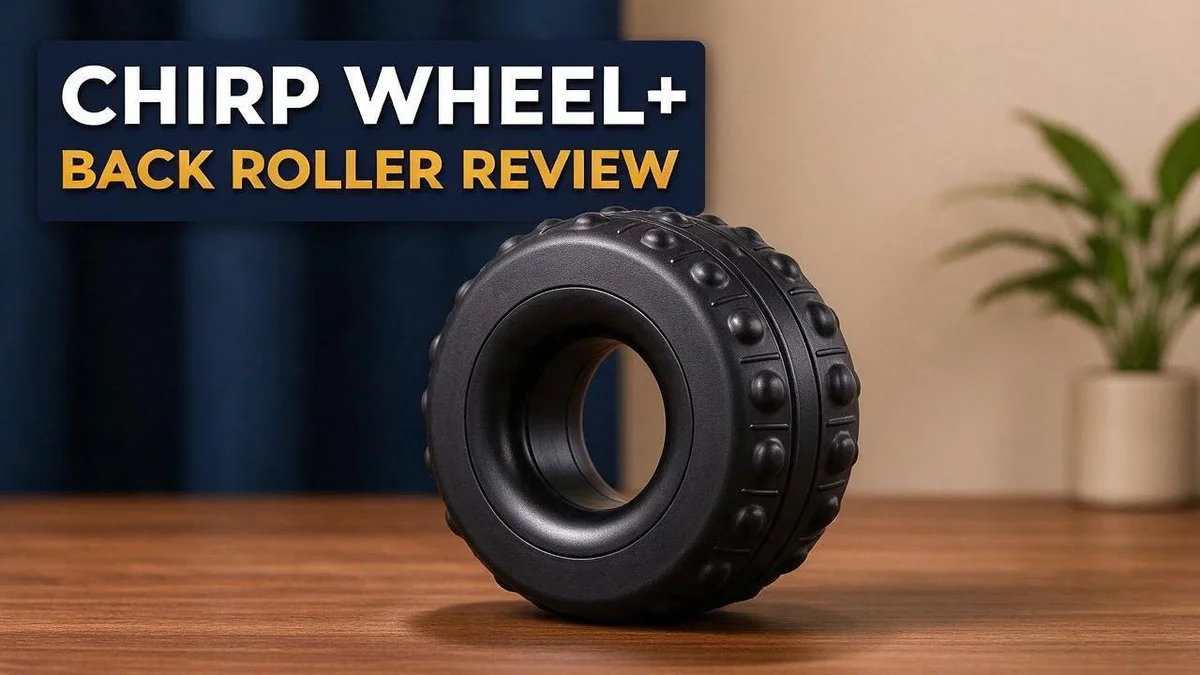
Chirp Wheel+ Back Roller Review 2026: Spinal Relief, Stability, and Safe Use
The Chirp Wheel+ Back Roller aims to help with that. It features a center groove that targets pressure along the spine.
Reviewers often say it helps with back and neck pain. Many also call it an upgrade over standard foam rollers.
It comes as a set of three. The XL model has a broader base for stability and supports up to 500 lbs.
Still, it is not right for everyone. Some users find it uncomfortable, and it can hurt if used incorrectly.
In this review, we look at what works, what does not, and who should try it. Keep reading to see if this roller fits your routine.
In a Nutshell
- The center groove sits directly over your spine, so it avoids pressing on the bones. You can focus pressure on tight spots along each side of your back.
- The XL model has a broader base that feels more stable on the floor. It supports up to 500 lbs, which suits larger frames and heavier users.
- Compared with standard foam rollers, this design reaches deeper tension along the spine. Many people feel a more direct stretch through the upper back and shoulders.
- Compared with a Lotus Wheel or yoga wheel, the groove sets it apart for spinal work. Choose the option that matches your body and comfort goals.
- Start slowly with short sessions. Rolling too hard or in the wrong position can cause soreness, so ease into it over a few days.
- Stop if pain feels sharp. Some users find it uncomfortable, so speak with a doctor first if you have a back injury or medical condition.
Center Groove Design and Spinal Targeting

- Ultimate Back Relief: Experience deep muscle relief and spinal comfort with the Chirp Wheel XR Knot...
- Targeted Trigger Point Release: Engineered for precise trigger point release, the Chirp Wheel XR...
Last update on 2026-11-03 / Affiliate links / Images from Amazon Product Advertising API Some of the links on this website are affiliate links, which means that at no additional cost to you, I earn a commission if you click through and make a purchase. I only recommend products and services that I believe will add value to my readers. Thank you for your support!
The center groove runs along the middle of the roller. Your spine rests inside that channel while your body moves. This setup lets the muscles beside your spine relax more easily.
Experts often call these muscles the paraspinal muscles. They sit on both sides of the spine and support posture. When they stay tight for long periods, the back can feel stiff and sore.
Rolling slowly lets you target one section at a time. You can focus on the upper back, the mid back, or the lower back. Move at your own pace for the best results.
Think of the groove as a guide. It keeps your body balanced while the muscles on each side get worked. Small shifts in position can change which muscles respond.
Good alignment matters during every session. Keep your head and hips in a steady line. Avoid arching your lower back too far, since that can strain the area.
Placing the roller under the shoulder blades can help with upper back tension. Many people find this spot eases pressure between the shoulders. Keep the movement small and controlled.
Breathing also plays a role. Slow, deep breaths can help your muscles loosen. Pause in tender spots and breathe until the tension eases. Stop if the movement feels forced.
The center groove gives you a clear focus for spinal work. It helps you move with purpose instead of guessing. Good form matters more than pressure.
Beginners may notice the groove feels different at first. Your body needs time to adjust to the contour. Tiny changes in pressure can make a big difference. Give your body a few days to adapt.
Many readers ask how often to use it. Most people do well with a few gentle sessions each week. Listen to your body and adjust as needed. Rest days help too.
Stability and Weight Capacity
Check your model before you roll. The XL model supports up to 500 lbs. Always confirm which version you own before your first session.
Weight limits protect both you and the roller. Going past the stated limit can strain the frame. It can also make the roller shift under you. Stay within the number listed on the packaging.
Most adults sit well below 500 lbs, so the limit rarely feels close. Still, knowing it helps you plan. A steady stance gives you better control during every move.
Choose the right floor. A firm, flat surface gives the best grip. Thick rugs can sink or shift under weight. A yoga mat on a hard floor can add a little extra traction and keep the roller in place.
Clear the area before you lie down. Move shoes, cords, and loose items out of reach. A clear space keeps your attention on your breathing and your position.
Test your balance first. Place your hands flat on the floor. Lower your back onto the roller slowly. Hold the position for a few breaths before you move. If the roller wobbles, stop and reset your feet and hands.
If you feel unsteady, practice near a wall. Rest one hand on the wall for support while you learn the rolling motion. Remove that support once you feel more comfortable.
Why steady setup helps results. A stable roller lets your muscles relax. Wobbling makes your body tense up. Tension works against the release you want. So a secure setup is part of the benefit, not just a comfort detail.
Stability also protects your joints. Your hips, shoulders, and neck stay in a safer line. This matters most for beginners who are still learning how their body responds.
Remember these simple checks. Confirm the model and weight limit. Pick a firm, flat floor. Test your balance before rolling. Stop if the roller slides or tips.
Pressure Intensity and Comfort Level
Pressure is easy to control once you know the trick. You decide how much weight rests on the roller. Your hands and feet carry part of your body weight, so you can lighten the load fast.
Try bending your knees while you roll. This lifts your hips off the roller. The pressure drops, but the muscles still get a gentle stretch.
Build pressure in stages. Start with light contact for about a minute. Add weight slowly over several rolls. This gives your body time to adjust.
Comfort levels differ from person to person. One person may enjoy a firm feel, while another needs a softer touch. Think of comfort as a scale from one to ten. Aim for a six or seven at most.
Body weight changes how the roller feels. Heavier body weight usually means more pressure on each muscle. Lighter body weight may need more time to reach a deep stretch.
Your daily routine affects comfort too. Tired muscles often feel more sensitive. Rolling after a long day at a desk may feel different than rolling after a workout. Notice how your body feels before you begin.
Some areas need extra care. Avoid rolling directly over the neck or the lower back bones. Keep the pressure on the muscles beside the spine instead. Your neck needs gentler handling than your mid back.
Tip: Rest one hand on a chair or the floor. This simple move gives you control. You can lean in gradually as your muscles relax.
Clothing can make a difference. Thin clothes let the roller press more directly onto your skin. Some people prefer a layer of fabric for extra cushioning. Choose what feels right for you.
Ask yourself a few questions after each session. Did the pressure feel like a dull stretch? Did the tight spots ease within a minute? If yes, you found the right amount. If not, lighten up next time.
With the right pressure, the Chirp Wheel+ can feel calm and effective rather than harsh. Small changes make a big difference over time.
Top 3 Alternatives
TriggerPoint GRID Foam Roller

- IMPROVE MUSCLE RECOVERY – Multi-density GRID features a three-dimensional surface that provides...
- OPTIMIZED FOR COMFORT – Unique foam construction with proprietary Distrodensity Zones is perfect...

Last update on 2026-11-03 / Affiliate links / Images from Amazon Product Advertising API Some of the links on this website are affiliate links, which means that at no additional cost to you, I earn a commission if you click through and make a purchase. I only recommend products and services that I believe will add value to my readers. Thank you for your support!
This roller gives your back a deep, firm massage. Its textured grid pattern targets tight knots and sore spots.
It works well for beginners and experienced users alike.
Its dense surface holds up over time, so it lasts through daily use. You can roll your back on the floor or lean against a wall for extra control. Start with short sessions of about two minutes, then add time as your muscles adjust.
Theragun Mini

- Ultra-portable, travel essential for relief anywhere: Theragun Mini features circulation-boosting...
- Includes 3 high-quality, scientifically-designed attachments to target aches, pains, and tension all...
Last update on 2026-11-03 / Affiliate links / Images from Amazon Product Advertising API Some of the links on this website are affiliate links, which means that at no additional cost to you, I earn a commission if you click through and make a purchase. I only recommend products and services that I believe will add value to my readers. Thank you for your support!
This compact massager fits easily into a gym bag or desk drawer. It delivers fast percussion pulses that loosen muscles quickly.
Reach your upper back and shoulders with ease.
It has several speed levels and a comfortable grip. Try different attachments to find the right feel for each area. Its quiet motor also makes it a good choice for use at your desk or while watching TV.
Hyperice Hypervolt

- Hypervolt Go 3 is a lightweight, travel-ready massage gun designed for life on the move. Perfect for...
- The Hypervolt Go 3 delivers streamlined performance with 5 percussion speeds, 2 essential head...
Last update on 2026-11-04 / Affiliate links / Images from Amazon Product Advertising API Some of the links on this website are affiliate links, which means that at no additional cost to you, I earn a commission if you click through and make a purchase. I only recommend products and services that I believe will add value to my readers. Thank you for your support!
This device pairs strong vibration with a smart, simple design. It offers multiple speed settings, so you can start gentle and build up.
Many users find it helpful for stiff backs and tight legs.
Its quiet motor and rounded head make it a good pick for home or the gym. Check the speed settings first so you avoid overdoing it on bruised or painful areas. If you want a powerful, hands free feel, this option is worth a look.
Proper Technique and Safe Use
Keep every session short at first. Five to ten minutes works well for beginners. Your body needs time to adjust to new pressure.
Watch for warning signs right away. Sharp pain, numbness, or tingling means you should stop. Mild stretching is normal, but pain that lingers is not.
Avoid arching your back. Many people lift their hips too high while rolling. Keep your abdominal muscles gently engaged. This keeps your spine supported and your lower back relaxed.
Support your head with your hands. Cradle your head with your fingers. Let your neck stay heavy and relaxed. Never pull your head up with your neck muscles.
Move in small ranges. Roll only a few inches up and down. Short movements give you more control. They also reduce the chance of strain.
Do not roll on bruises or swollen areas. Skip any spot that feels hot, red, or tender to the touch. Wait until the area heals before you try again.
Give your muscles recovery time. Rest at least one day between longer sessions. Muscles repair during rest, so this break helps you feel better over time.
Stop if something feels wrong. Step away from the roller and stand up slowly. Speak with a doctor if symptoms return after a session.
Inspect your roller before each use. Look for cracks, loose parts, or worn surfaces. A damaged roller can slip or shift under your weight. Replace it if you spot any damage.
Wear comfortable, fitted clothing. Loose fabric can bunch up under your back. Thin layers help you feel the roller clearly without irritation.
Store your roller safely. Keep it flat in a dry spot. Heat and moisture can weaken materials over time. Keep it away from children and pets.
Pair rolling with gentle movement. Light walking or easy stretches after a session help your body settle. This habit may improve how you feel the next day.
What Is Included in the 3-Pack
Opening the box reveals three back rollers in one bundle. Sold as a 3 pack, the set gives you more than a single roller. Many shoppers like having spares ready.
Each roller shares the same design. Every one has a center groove that sits along the spine. This groove helps direct pressure where many people feel tight.
Think of the set as a full routine kit for home, work, or travel. You can keep one roller in the living room and another near your desk. The third stays in a bag for trips.
The XL model stands out from the standard version. If you choose it, you get a broader base for extra stability. Check the label to confirm which model comes in your set.
Shoppers often compare this set with the Lotus Wheel, yoga wheels, and standard foam rollers. Each option feels different under the back. Reviewers say this design reaches tension along the spine more directly.
A 3 pack suits homes where more than one person wants relief. Partners, roommates, or family members can each take a turn.
Rotating rollers keeps each one clean and ready. Wipe down the surface after every session. Let it dry fully before you store it.
Store the rollers in a dry spot away from direct sunlight. Keep them together so none gets lost.
Before you start, count the rollers in the package. Make sure all three arrived in good condition. Contact the seller quickly if anything looks damaged.
Having three rollers lets you explore the feel of each one. Keep short notes on how each session goes. Many people notice small changes over time. Your routine will become clearer as you go.
Pros and Cons
Pros
- Many reviewers say it helps with back and neck pain.
- It feels like a clear upgrade over basic foam rollers.
- Stretches the muscles that run along your spine.
- Relieves deep tension that sits close to the spine.
- Some users report better sleep after regular use.
Cons
- Some people find it uncomfortable at first.
- It can hurt if you use it the wrong way.
- Sore muscles may feel worse after the first few sessions.
- Beginners may need time to adjust to the pressure.
Who Should Buy It
Not every reader will get the same results from this roller. The best match is an adult who sits for long hours.
Desk workers, drivers, and gamers often feel the most stiffness. They may notice the biggest change.
People who enjoy a regular stretch routine may also like it. It can slot into a warm up before a workout or a cool down after a run.
Athletes who want more mobility often find this tool handy. It works on large back muscles that tighten during training.
Gym goers who lift heavy weights often feel tight muscles along the spine. Adding a short roll after lifting may help them relax.
Some readers should think twice first. Anyone with a recent injury, bone thinning, or a spinal condition should speak with a doctor first.
Pregnant readers also need medical advice before they start any new back routine.
Beginners who feel nervous can still try it. Go slow and follow a gentle plan.
Begin on a soft surface, then build up as your body adapts. Pay attention to how your body responds after each session.
Readers who want instant, deep massage may feel let down. This tool works as a self care aid, not a replacement for a licensed therapist.
Think of it as a helpful addition to your daily habits rather than a cure. If you enjoy learning how your body moves, this roller can keep you curious.
Office workers can use it during short breaks. A few minutes on the floor can reset posture before the next meeting.
Who should skip it? People who dislike floor exercises may prefer a chair stretch instead. Seniors with balance concerns should also use a chair or wall for support while they roll.
In short, the right buyer wants a simple tool, moves slowly, and checks with a doctor when needed.
Final Verdict
Our final take is simple: this roller suits people who want a hands on way to ease spinal tightness. It works best as one part of a wider routine. Expect steady progress rather than instant change.
Track your results for two weeks. Write down your morning stiffness, how long you can sit comfortably, and how your neck feels after work. Patterns often show up faster on paper than in memory.
Pair the roller with simple habits. Short walks, gentle hip stretches, and regular water breaks add up over time. The roller then supports those habits instead of carrying the whole job alone.
Set realistic goals before you start. If you hope for a deep, spa like massage, you may feel let down. This tool asks you to move your body, so it gives you more control over each session.
Be honest about your comfort limits. Some people prefer softer tools, while others want more firmness. Start with short sessions and increase the time only when your body feels ready.
Know when to pause. Sharp pain, numbness, or pain that spreads into your arms or legs needs a doctor’s review. A roller supports general wellness, but it never replaces proper medical care.
Weigh the trade offs one final time. The set offers variety for shared homes and travel, yet the learning curve can feel real during the first week. Patience matters more than speed here.
Overall, the Chirp Wheel+ Back Roller fits patient users who enjoy hands on routines. Start slow, track your progress, and give your back time to adapt. Many people find that consistency makes the biggest difference.
Frequently Asked Questions
Is the XL model a better choice for heavier users?
The XL model has a broader base for extra stability. It supports up to 500 lbs. This makes it a sturdy option for people who want a steady feel under their body.
How does it compare to the Lotus Wheel?
Both tools use a similar rolling motion. The Chirp Wheel+ has a center groove that helps you focus on the area beside your spine. Try both in person if you can.
Where should I place the roller on my body?
Lie on your back with the roller under your upper back. Keep your knees bent and your feet flat. Move slowly and breathe calmly as you roll.
Should I use a mat underneath?
Yes, a thin mat can help on hard floors. It adds grip and makes the session more comfortable. Keep the mat flat so the roller stays steady.
How often can I use it each week?
Many people use it a few times each week. Notice how your back feels the next day. If stiffness grows, cut back on the number of sessions and try again later.

Hi, I’m Elowen Porter, the creator of GreenLight.blog.
I share honest reviews and insights on supplements and Amazon health products to help you make smarter wellness choices.
With a passion for natural living and evidence-based products, I dig deep to find what truly works.
My goal is to simplify your supplement search with real results and trusted recommendations.
Let’s make healthy living a little easier—one product at a time.